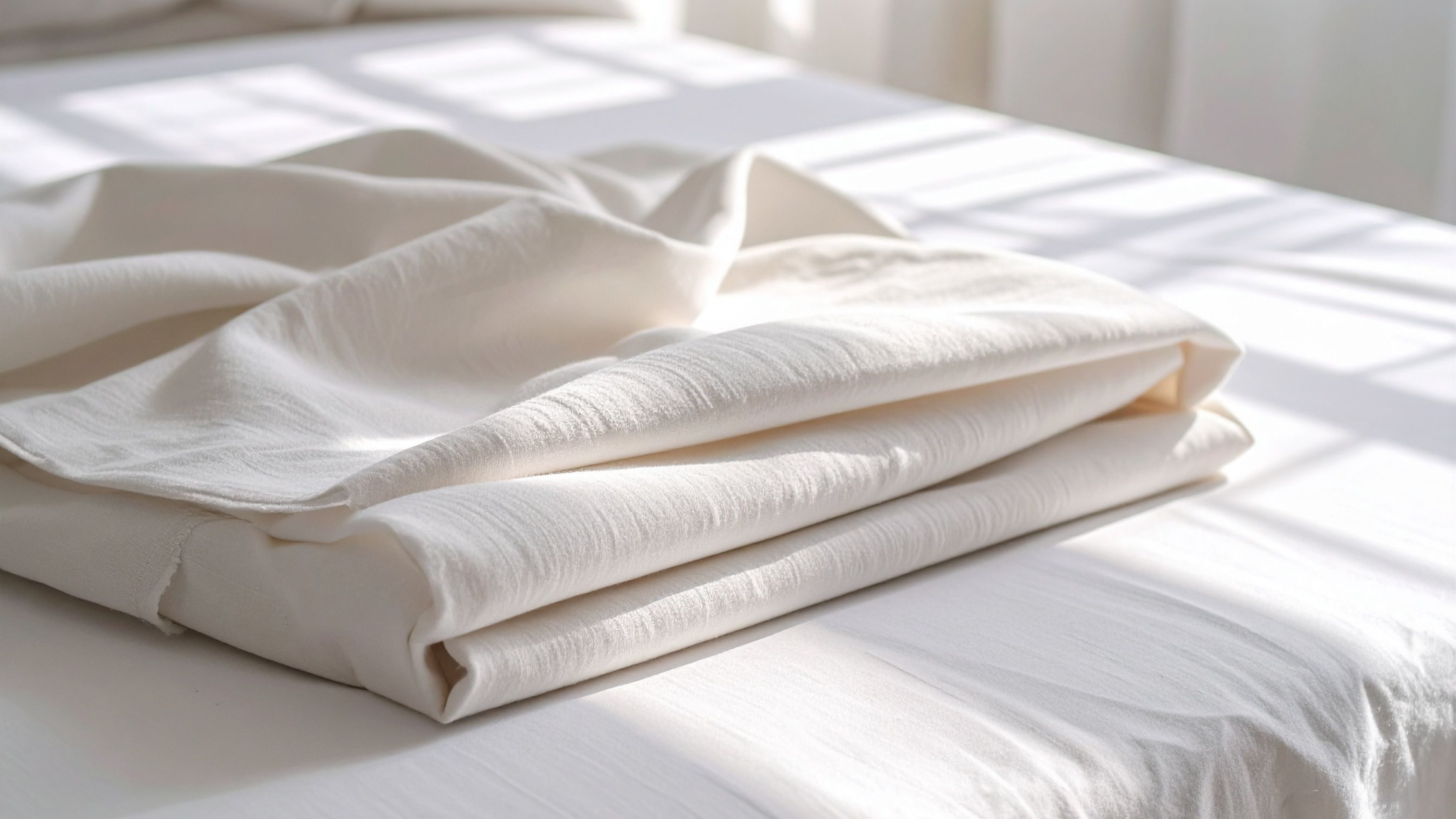
There comes a point when bedding stops being just bedding.
For some of us, that moment arrives quietly. Maybe you wake up too warm for the third night in a row. Maybe your sheets feel soft at first, but somehow clingy by 3 a.m. Maybe you finally invest in something labeled “cooling,” “organic,” “bamboo,” or “hotel quality,” only to realize it does not feel the way you expected once you actually sleep in it. And that is usually when the question begins.
Why do some sheets feel crisp and breathable while others feel heavy and slippery? Why does one quilt wash beautifully while another starts to pill, shrink, or lose its shape? Why does one “bamboo” sheet feel cool and silky, while another feels thin and oddly synthetic? Why does “organic cotton” sometimes feel luxurious and sometimes feel no better than a basic cotton set from a big box store?
The answer is simple, but not always obvious.
All bedding is not created equal because all textiles are not created equal.
What touches your skin every night is shaped by much more than color, price, thread count, or a pretty product description. Bedding is the result of fiber, yarn, weave, finishing, dyes, certifications, construction, and care. Each one of those choices changes how a sheet breathes, how it absorbs moisture, how it feels against the skin, how it holds up in the wash, and how long it remains beautiful after the first few nights of admiration have passed.
This matters for everyone. But for women in midlife, especially those navigating perimenopause and menopause, it can matter in a much more personal way.
When your body temperature feels less predictable, when night sweats interrupt your sleep, when your skin feels more reactive, when rest already feels fragile, bedding becomes part of the sleep environment in a deeper way. It will not solve every sleep issue, and it should never be sold as a cure. But the wrong bedding can make a difficult night feel worse. The right bedding can make rest feel more possible.
That is why we are starting here.
Before we talk about brands, beautiful beds, quilts, sheets, or what is worth buying, we need to talk about what bedding is actually made of.
Bedding begins with the fiber
The first thing to understand is that fiber is the foundation.
Fiber is the raw material that becomes the yarn, and the yarn becomes the fabric. Cotton, linen, wool, silk, bamboo-derived viscose, TENCEL lyocell, polyester, microfiber, and blends all begin with different properties. Some come directly from plants or animals. Some are regenerated from plant cellulose through industrial processing. Some are synthetic and made from petroleum-based materials.
None of this automatically makes one fiber perfect and another fiber useless. It simply means they behave differently.
Cotton is known for softness, absorbency, breathability, and familiarity. Linen, made from flax, is loved for its airy, textured feel and its ability to soften over time. Wool can help manage moisture and temperature, though it is more common in blankets, mattress toppers, and comforters than everyday sheets. Silk feels smooth and delicate, though it often requires more careful care.
Then there are regenerated cellulosic fibers, which are made from plant-based cellulose but transformed through manufacturing. This includes fibers like lyocell, modal, rayon, and viscose. TENCEL is a branded version of lyocell and modal made by Lenzing. These fabrics can feel incredibly smooth, drapey, and cool to the touch, which is why they have become popular in bedding.
Bamboo bedding usually falls into this regenerated category. Many products marketed as bamboo are not made from raw bamboo fiber in the way a person might imagine. More often, bamboo is the plant source used to create rayon or viscose. That distinction matters because the marketing can sound very natural, while the finished textile is the result of significant processing.
This does not mean bamboo-derived bedding is bad. Some bamboo viscose or bamboo lyocell bedding can feel beautiful. It can be silky, breathable, and appealing for hot sleepers. But it does mean the label deserves a closer look. “Bamboo” alone does not tell the whole story.
The same fiber can feel completely different
One of the biggest mistakes people make when shopping for bedding is assuming that fiber tells the entire story.
It does not.
Two cotton sheet sets can feel nothing alike. One may feel crisp, cool, and structured. Another may feel silky, warm, and smooth. Both can be 100 percent cotton. The difference may come from the staple length of the cotton, the quality of the yarn, the weave, the finishing, and the way the fabric was processed.
This is why “cotton” on a label is only the beginning.
Long-staple cotton, for example, is generally valued because longer fibers can be spun into smoother, stronger yarns. Shorter fibers can create more ends in the yarn, which may contribute to roughness, pilling, or a less refined feel over time. That does not mean every long-staple cotton sheet is automatically luxurious, but it does explain why some cotton bedding feels more durable and polished than others.
Weave also changes everything.
Percale and sateen are two common cotton weaves, and they feel very different. Percale usually has a crisp, matte, breathable feel. It is often described as cool and hotel-like, although quality varies widely. Sateen has a smoother, silkier hand and a subtle sheen. It can feel more luxurious to some people, but it may also sleep warmer depending on the weight and construction.
Then there is jersey, which feels more like a soft T-shirt. Flannel feels brushed and cozy. Muslin feels airy and relaxed. Gauze feels textured and breathable. Linen has its own lived-in softness and natural rumple.
This is where bedding becomes less about what sounds best and more about what your body prefers.
A woman dealing with night sweats may love crisp percale because it feels cooler and less clingy. Someone else may prefer TENCEL lyocell because it feels smooth and gentle against the skin. Another person may love linen because it feels breathable, unfussy, and relaxed. The goal is not to crown one perfect fabric. The goal is to understand what each fabric is likely to do once you are actually sleeping under it.
Why this matters more when you sleep hot
Sleeping hot is not just about the thermostat.
It is about how your body, mattress, pajamas, sheets, blankets, and room temperature work together. If one layer traps heat or moisture, the whole sleep environment can start to feel uncomfortable.
This is especially important in midlife because many women experience warmer nights, hot flashes, or night sweats during the menopausal transition. When that happens, bedding that once felt perfectly fine may suddenly feel too heavy, too clingy, or too slow to dry.
A sheet does not need to be icy to be helpful. In fact, “cooling” can be a misleading word. Some bedding feels cool to the touch when you first get in, but that does not always mean it will manage heat and moisture well all night.
Better questions are:
Does the fabric breathe?
Does it absorb moisture?
Does it dry reasonably well?
Does it cling to the skin when damp?
Does it trap warmth close to the body?
Does it work with your blanket or quilt, or does the whole bed become too heavy?
That last question is important because sheets do not work alone. A breathable sheet under a heavy polyester-filled comforter may still feel hot. A beautiful cotton quilt over a mattress protector that traps heat may not perform the way you hoped. A cooling sheet paired with thick pajamas may not be enough.
Bedding is a system.
The fitted sheet, flat sheet, blanket, quilt, duvet, comforter, pillowcase, mattress protector, pajamas, and room temperature all contribute to how the night feels. This is why one product rarely fixes everything. It is also why a thoughtful bedding setup can make such a difference.
For warmer sleepers, lighter layers are often more flexible than one heavy layer. A breathable sheet and a quilt may work better than a thick duvet. A cotton, linen, wool, or lightweight bamboo-derived blanket may feel better than a synthetic comforter that traps heat. A mattress protector should also be considered carefully because some waterproof protectors can change the feel and temperature of the bed.
If your sleep is already being interrupted by heat, the goal is not just softness. The goal is airflow, moisture management, and ease.
Sensitive skin notices what marketing ignores
Skin changes are another reason bedding deserves more attention.
Some people become more sensitive to texture, heat, fragrance, detergents, dyes, or fabric finishes as they get older. Others have always had sensitive skin but never connected their bedding to the problem. If you are lying against a fabric for seven or eight hours, night after night, small irritations can become hard to ignore.
This is where quality matters beyond luxury.
A sheet can be expensive and still feel irritating. A blanket can be beautiful and still shed, pill, or feel scratchy. A fabric can be labeled natural and still be treated with dyes, softeners, wrinkle-resistant finishes, or other processes that may not agree with everyone’s skin.
For sensitive skin, the conversation should include both the textile and the laundry routine. The softest organic cotton sheet can still feel irritating if it is washed in a heavily fragranced detergent or dried with scented dryer sheets. A delicate fabric can feel rough if it is over-dried, washed too harshly, or exposed to products that leave residue behind.
This does not mean everyone needs to become obsessive. It simply means the bed should be treated as a place of contact, not just decoration.
If your skin is reactive, itchy, dry, or easily irritated, pay attention to how your bedding feels before and after washing. Notice whether certain fabrics make you warmer. Notice whether fragrance makes a difference. Notice whether the texture feels soothing or distracting.
Bedding should not be another source of discomfort.
Softness is not the same as quality
This may be one of the most important lessons in bedding.
Softness sells.
You can touch a sheet in a store, feel something silky or plush, and immediately think it must be high quality. But softness at first touch does not always tell you how the fabric will perform after ten washes, how breathable it will be at night, or whether it will pill after a few months.
Some bedding is made to feel impressive right out of the package. Finishing treatments can create a smooth, soft hand that feels luxurious at first. But the real test of bedding is not only how it feels on night one. It is how it behaves after being slept in, washed, dried, folded, and put back on the bed.
Good bedding should not fall apart after normal care. It should not lose its shape immediately. It should not pill excessively after a short time. It should not become stiff, scratchy, or strangely thin after a few washes. It should not require an impossible level of maintenance unless it is clearly sold as a delicate luxury textile.
This is why reviews should go beyond unboxing.
A beautiful package is lovely. A silky first touch is nice. But the more important questions come later.
Did it wash well?
Did it shrink?
Did the seams hold?
Did the color fade?
Did it become softer or rougher?
Did it sleep cool or just feel cool at first?
Did it still feel good after a few real nights of use?
That is the kind of bedding conversation we need more of.
Thread count is not the whole story
Thread count has been used for years as a shortcut for quality, but it can be misleading.
A higher number does not automatically mean a better sheet. Thread count only tells you how many threads are woven into a certain area of fabric. It does not tell you the quality of the cotton, the length of the fiber, the type of yarn, the weave, the finishing, or whether the sheet will feel breathable.
In some cases, very high thread counts can create a denser fabric. That may feel smooth, but it may not be ideal for someone who sleeps hot. A lower thread count percale made with high-quality cotton may feel cooler and more breathable than a very high thread count sheet that feels heavy or overly slick.
This is why shopping by thread count alone can lead people in the wrong direction.
A better approach is to ask what kind of cotton is used, what weave it has, how it is finished, whether it is certified, how it washes, and whether the weight of the fabric matches the way you sleep.
Thread count is a detail. It is not the whole decision.
Organic is not just a mood
The word organic carries a certain feeling. It sounds clean, safe, natural, and better. Sometimes it is. Sometimes the marketing is doing more work than the material.
Organic cotton means the cotton was grown according to organic agricultural standards. But a finished bedding product involves more than the crop. It may also involve spinning, weaving, dyeing, finishing, sewing, packaging, and shipping. That is why certifications matter.
A product labeled with a credible organic textile certification gives you more to work with than a vague product description. GOTS, for example, looks at organic fiber content as well as processing standards. OEKO-TEX STANDARD 100 is different. It does not mean the fabric is organic. It means the product has been tested for certain harmful substances.
Both can be useful, but they do not mean the same thing.
This is where shoppers get confused. A sheet can be OEKO-TEX certified and not organic. A sheet can contain organic cotton but not be fully certified as an organic textile. A product can be described as natural and still include synthetic blends. A product can be called sustainable while giving very little detail about fiber content, processing, or certification.
The lesson is not to distrust every brand. The lesson is to learn the language.
When you know what the labels mean, you shop with more power.
Bamboo, eucalyptus, and the comfort of pretty words
Bedding marketing loves beautiful plant words.
Bamboo sounds fresh and green. Eucalyptus sounds spa-like and clean. Cotton sounds classic. Linen sounds effortless. Organic sounds pure. Cooling sounds like relief.
But pretty words are not enough.
When you see bamboo bedding, look for the actual fiber content. Is it viscose from bamboo? Rayon from bamboo? Bamboo lyocell? A blend? The difference matters.
When you see eucalyptus bedding, check whether it is TENCEL lyocell, another lyocell, or a vague plant-based claim. TENCEL is a brand name, not a generic term for every eucalyptus-style sheet. A brand should be clear about what the fabric is and where the fiber comes from.
When you see organic cotton, look for certification details. Is the finished product certified, or is the brand only saying the cotton was organically grown? Is it 100 percent organic cotton, or is it blended? Is there a license number or certification body listed?
When you see cooling, ask what makes it cooling. Is it the fiber? The weave? The weight? The finish? The construction? Or is it simply a word placed on the product page because everyone is searching for cooler sleep?
Good brands explain. Better brands explain clearly.
Price does not always equal quality
Luxury bedding can be worth it. It can also be overpriced.
Affordable bedding can be surprisingly good. It can also be cheap for a reason.
Price is one signal, but it should never be the only signal. A higher price may reflect better raw materials, stronger certifications, ethical manufacturing, thoughtful construction, or smaller production runs. It may also reflect branding, photography, packaging, influencer marketing, or a beautiful story.
The same is true on the lower end. A lower price may be accessible and reasonable. It may also mean shortcuts in fiber quality, finishing, stitching, transparency, or durability.
This is why bedding reviews should not only ask, “Is it pretty?” or “Is it soft?”
They should ask, “Does the quality match the promise?”
That question is especially important when women are spending their own money trying to solve a real comfort issue. Night sweats, warmer sleep, skin sensitivity, and disrupted rest are not aesthetic problems. They are lived experiences. When a brand promises cooling, breathability, softness, or premium quality, those words should mean something.
What to look for before you buy
A better bedding purchase begins with slowing down long enough to read the details.
Start with the fiber content. Do not stop at the headline. Look for the actual label information. If the product says bamboo, find out whether it is viscose, rayon, lyocell, or a blend. If it says cotton, see whether it is long-staple, organic, conventional, percale, sateen, jersey, or flannel. If it says linen, look for whether it is 100 percent linen or blended.
Next, look at the weave and weight. A crisp percale cotton sheet will not feel like silky sateen. Linen will not feel like bamboo viscose. Gauze will not feel like dense cotton. If you sleep hot, weight and airflow matter as much as softness.
Then look at certifications. GOTS, OEKO-TEX, and other labels can provide helpful information, but only if you understand what they certify. Do not assume every certification means the same thing.
Look at care instructions. If a sheet requires delicate washing, low heat, no soaking, no brighteners, no bleach, and careful handling, that may be fine if you are willing to care for it that way. But if you want everyday bedding that can handle real life, maintenance matters.
Look at return policies. Bedding is personal. You may not know how something truly sleeps until you have used it. A brand that allows a reasonable trial or return window gives you more room to make a thoughtful choice.
Finally, look at reviews with discernment. Pay attention to what people say after washing. Notice comments about heat, pilling, shrinkage, softness, durability, and customer service. Ignore reviews that only talk about the packaging unless packaging is what matters most to you.
The real story of bedding begins after it leaves the box.
The goal is not perfection. The goal is discernment.
It is easy to become overwhelmed by textile language. Cotton, linen, lyocell, modal, viscose, bamboo, percale, sateen, GOTS, OEKO-TEX, thread count, staple length, garment washed, stonewashed, enzyme washed. It can feel like too much before you even get the fitted sheet on the mattress.
But the point is not to memorize every textile term.
The point is to become harder to mislead.
Once you understand the basics, you begin to see bedding differently. You stop assuming that every “cooling” sheet will help with night sweats. You stop believing that every bamboo product is automatically natural. You stop treating thread count like a quality guarantee. You stop assuming organic always means the entire product meets the standard you had in mind.
You begin to ask better questions.
What is this made of?
How was it made?
How does it feel after washing?
Does it breathe?
Does it hold heat?
Does it work for my body now?
That last question matters most.
Because the body you are sleeping in today may not be the body you were sleeping in ten years ago. Midlife can change the way you experience heat, texture, weight, softness, and comfort. Bedding that once felt perfect may suddenly feel too warm. A heavy duvet that once felt cozy may now feel suffocating. A synthetic blanket that seemed easy may start to feel clammy. A sheet that looked beautiful online may not support the kind of sleep your body is asking for.
That does not mean you are difficult.
It means your sleep environment deserves to evolve with you.
This is where we begin
This Start Here series is not about turning bedding into another thing to perform or perfect.
It is about helping you understand what you are bringing into your bed.
It is about knowing the difference between cotton and organic cotton, between bamboo marketing and bamboo-derived fabric, between TENCEL and generic lyocell, between percale and sateen, between softness and durability, between a pretty promise and a product that actually supports rest.
Because bedding is intimate. It touches your skin. It holds your body. It absorbs heat and moisture. It shapes the feeling of the room you return to every night.
And when sleep is already complicated, the bed should not be working against you.
So before we review products, compare brands, or talk about what is worth buying, we are going to learn the language of bedding together. Not in a stiff or overwhelming way, but in a way that makes shopping clearer, rest easier, and your bedroom more supportive.
All bedding is not created equal.
And once you understand why, you will never look at a sheet label the same way again.
Discover more from Sleep Lately
Subscribe to get the latest posts sent to your email.