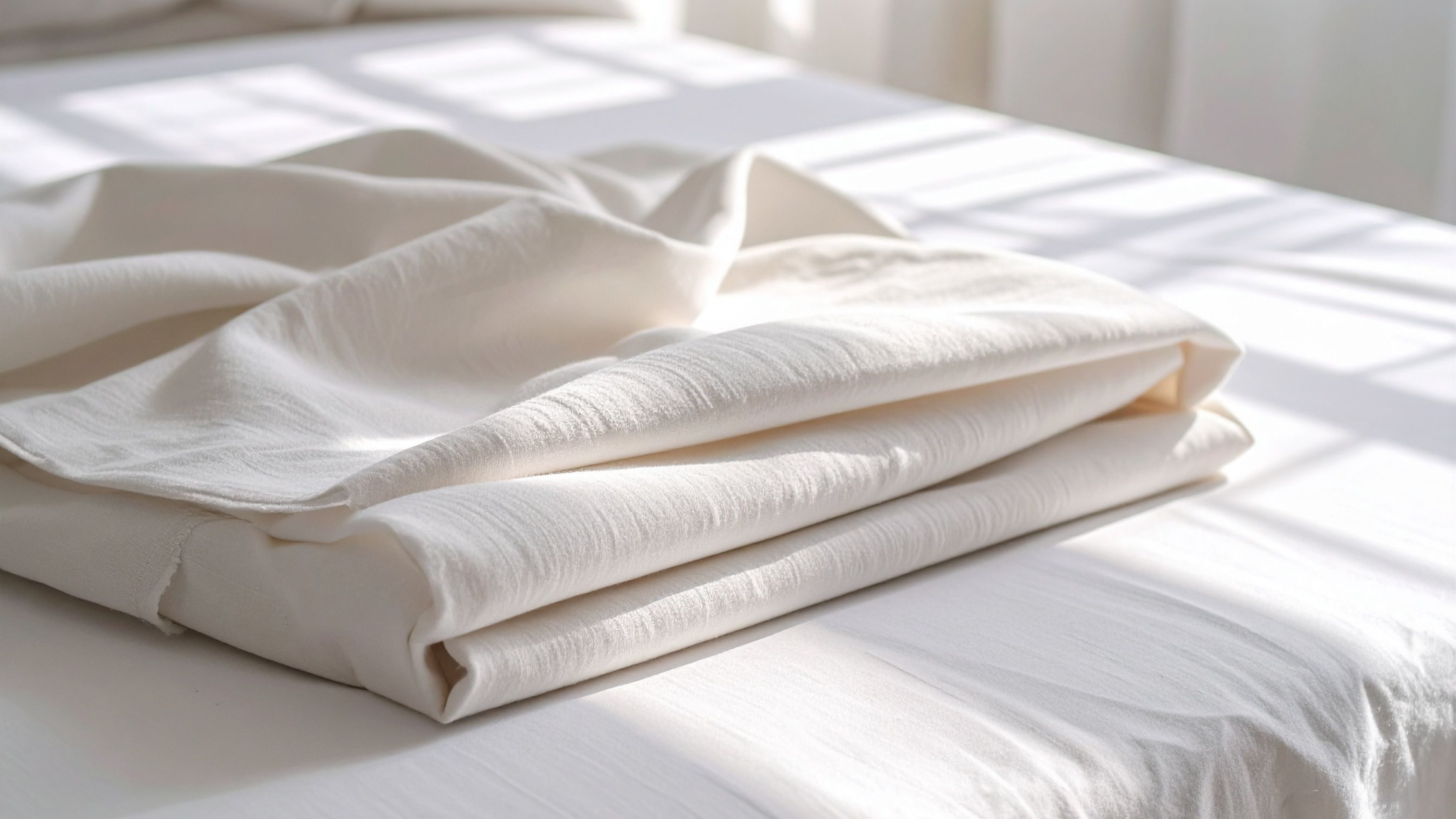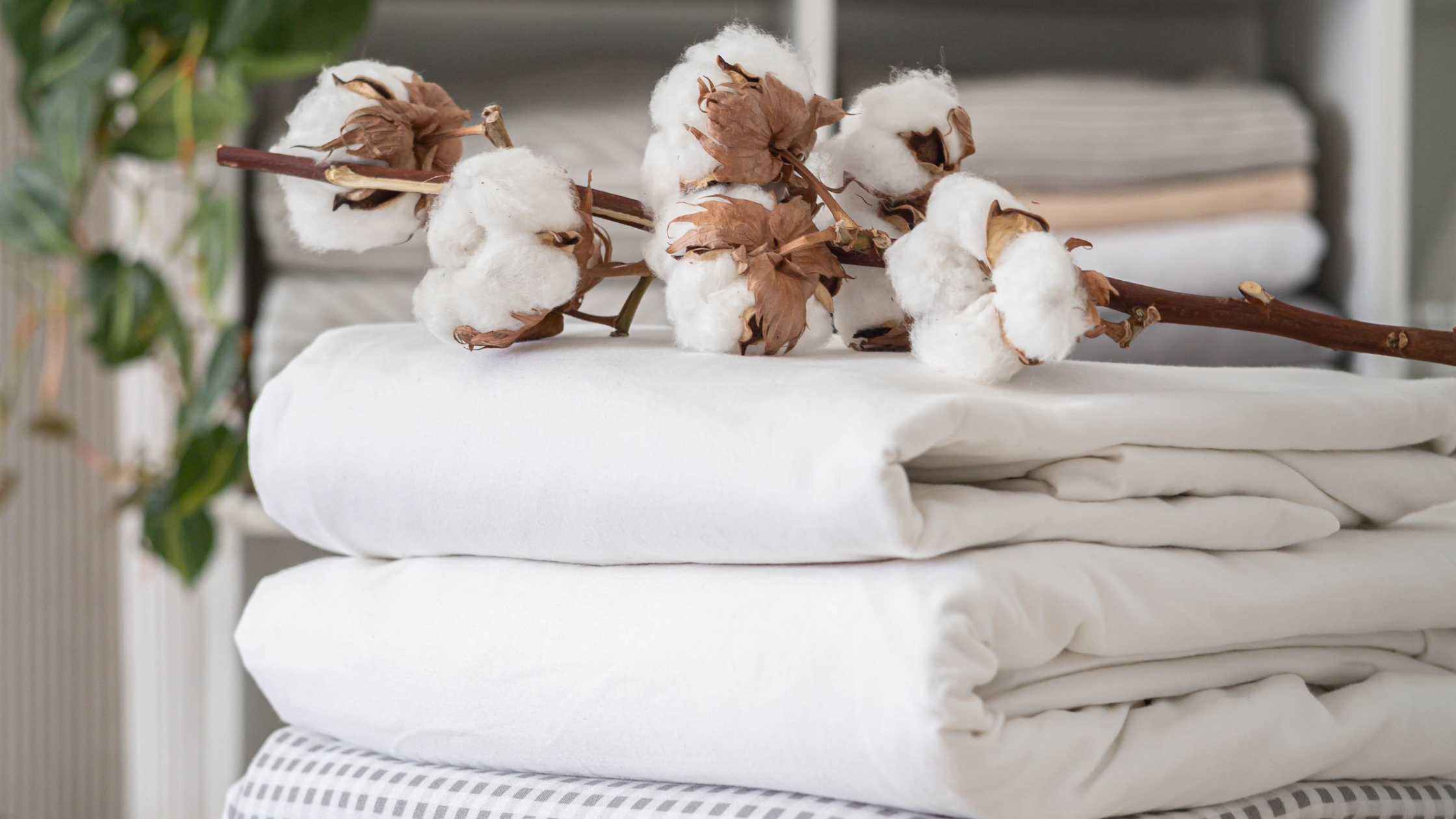
One of the most confusing things about bedding is that two sheet sets can both say 100 percent cotton and feel nothing alike.
One feels crisp, cool, and almost like a freshly ironed shirt. The other feels smooth, silky, and more fluid against the skin. One has a matte finish. The other has a subtle sheen. One feels lighter and airier. The other feels a little more polished, drapey, and warm.
Both may be cotton.
Both may even be organic cotton.
Both may come from reputable brands.
So why do they feel so different?
The answer is weave.
Fiber tells you what the fabric is made from. Weave tells you how that fiber is arranged. And in bedding, that arrangement can change almost everything: texture, temperature, drape, crispness, sheen, durability, wrinkles, and the way the sheet feels against your skin at 3 a.m.
This is why understanding percale and sateen matters.
If you have ever bought cotton sheets and felt disappointed because they were too crisp, too slippery, too warm, too stiff, too wrinkly, or not as luxurious as you expected, there is a good chance the issue was not cotton itself. It may have been the weave.
Percale and sateen are two of the most common cotton sheet weaves, and they create two very different sleep experiences.
Neither one is automatically better.
But one may be much better for you.
Cotton is the fiber. Percale and sateen are the weave.
This is the first thing to understand.
Cotton is the material.
Percale and sateen describe how the cotton yarns are woven into fabric.
That distinction matters because shoppers often compare “cotton sheets” to “percale sheets” as if they are two separate materials. But percale sheets are often cotton sheets. Sateen sheets are often cotton sheets too.
The difference is not always the fiber.
The difference is the construction.
Think of it like cooking. Flour is an ingredient, but the same flour can become bread, pasta, cake, or pastry depending on how it is handled. Cotton is the ingredient. Percale and sateen are two different recipes.
That is why the same cotton can become a crisp sheet or a silky one.
It is also why “100 percent cotton” is not enough information when you are shopping for bedding.
You need to know what kind of cotton it is, how it was spun, how it was woven, how it was finished, and how it behaves after washing.
But the weave is one of the biggest clues.
What is percale?
Percale is a plain weave.
That means the yarns are woven in a simple over-under pattern. One thread goes over, then under, then over, then under. The result is a balanced, structured fabric with a matte surface and a crisp hand.
Percale is the sheet many people associate with a cool hotel bed or a freshly laundered button-down shirt. It does not usually feel silky. It does not usually have much shine. It has more of a clean, dry, breathable feel.
Good percale can feel smooth, but it is not usually slippery.
It can feel crisp at first and soften with washing.
It can feel light against the body.
It can also wrinkle more easily because it does not have the same smooth, drapey surface as sateen.
For many hot sleepers, percale is the cotton weave that makes the most sense. It tends to feel cooler, lighter, and more breathable than sateen, especially when the fabric is not too dense and the cotton quality is good.
This is why percale often appeals to women dealing with warmer nights, night sweats, or the feeling of being trapped under heavy bedding.
It has air in its personality.
Percale does not try to hug the body. It sits more lightly. It feels fresh rather than plush. It gives the bed a cleaner, more structured feeling.
If you love a crisp sheet, percale may be your language.
What is sateen?
Sateen is woven differently.
Instead of the simple one-over, one-under pattern of percale, sateen uses a satin-style weave. This means yarns float over multiple yarns before going under. Those longer floats create a smoother surface, a subtle shine, and a softer, silkier feel.
Sateen is usually more fluid than percale.
It drapes more.
It has more luster.
It often feels smoother right out of the package.
It may also feel slightly heavier or warmer, depending on the quality, weight, and thread count.
Sateen is the cotton weave many people describe as buttery, silky, or luxurious. It can make a bed look more polished because the fabric has a gentle sheen and tends to resist wrinkles better than percale.
For people who dislike crisp sheets, sateen can feel more inviting.
If percale feels too stiff, sateen may feel more soothing.
If linen feels too textured, sateen may feel more refined.
If you want cotton but prefer a silkier hand, sateen may be the better fit.
But for hot sleepers, sateen requires more consideration. Because of its smoother and often denser weave, it may not feel as airy as percale. Some people sleep beautifully in sateen year-round. Others find it too warm during summer or during seasons of hormonal heat.
This is why body experience matters more than the product description.
The emotional difference between percale and sateen
The technical difference is weave.
The emotional difference is how the bed feels when you get into it.
Percale feels like opening a window.
Sateen feels like smoothing your hand across something polished.
Percale feels crisp, clean, matte, and fresh.
Sateen feels silky, soft, luminous, and drapey.
Percale has a lighter, more tailored personality.
Sateen has a more fluid, indulgent personality.
Percale often says: cool, breathable, simple, classic.
Sateen often says: smooth, cozy, elegant, soft.
Neither is right for everyone.
The mistake is assuming that everyone wants the same version of luxury.
Some people experience luxury as a crisp white bed that feels cool and fresh.
Some experience luxury as silky cotton that glides against the skin.
Some want a sheet that feels structured and hotel-like.
Some want a sheet that feels soft and enveloping.
There is no universal answer because bedding is personal. The right weave depends on your body, your skin, your temperature, your room, your season of life, and the way you like to feel when you settle into bed.
Why percale often works for hot sleepers
If you sleep hot, percale is often the first cotton weave worth considering.
That does not mean every percale sheet is automatically cooling. No sheet is magic. But percale’s structure tends to feel lighter and more breathable than sateen, especially when made with good cotton and a reasonable thread count.
For women in perimenopause or menopause, this can matter.
When your body temperature feels unpredictable, bedding that once felt cozy may suddenly feel heavy. A sheet that feels silky at bedtime may feel too warm by 3 a.m. A dense fabric may become uncomfortable once night sweats enter the picture.
Percale can be helpful because it tends to feel less clingy. It usually has a drier hand than sateen. It does not drape as closely around the body. That can make a warm sleeper feel less trapped.
A crisp percale sheet paired with a lighter quilt can be a practical setup for warmer nights. It gives the body more room to breathe than a heavy sateen sheet under a thick duvet.
But the full bed still matters.
A percale sheet will not overcome a heat-trapping mattress protector, a foam mattress that runs warm, thick pajamas, or a heavy polyester-filled comforter. Cooling is not just about the sheet. It is about the whole sleep environment.
Still, if your main complaint is that your cotton sheets feel too warm or too heavy, percale is often a good place to begin.
Why sateen may feel better for some sensitive sleepers
Sateen can be appealing for people who want softness without giving up cotton.
The smooth surface can feel gentle against the skin. If crisp percale feels too dry or stiff, sateen may feel calmer. If you dislike texture, sateen may feel more soothing than linen or gauze.
This can matter for people with sensitive skin.
Skin sensitivity is not only about fiber content. Texture matters. Friction matters. Roughness matters. Pilling matters. Detergent residue matters. A sheet can be made from a beautiful natural fiber and still feel uncomfortable if the surface does not agree with your skin.
Sateen’s smoother finish may be a better fit for someone who finds crisp sheets irritating. It may also appeal to someone who likes the feel of silkier fabrics but wants cotton rather than silk, bamboo-derived viscose, or TENCEL.
But there is a tradeoff.
Some sateen sheets can feel warmer. Some may be more prone to snagging because of the longer yarn floats on the surface. Some may feel too slippery for people who prefer a more anchored, crisp bed.
This is the bedding lesson that repeats again and again: softness is not the whole story.
A sheet can be soft and too warm.
A sheet can be crisp and more breathable.
A sheet can feel luxurious in your hand and uncomfortable after several hours.
Your skin may love sateen. Your body temperature may not.
Or your body may love sateen in winter and percale in summer.
That is not inconsistency. That is listening.
Thread count changes the experience, but it does not decide quality by itself
Thread count gets far too much attention in bedding.
It is often used as if it is the single marker of luxury, but it is only one piece of the fabric story. Thread count tells you how many threads are woven into a certain area of fabric. It does not tell you the quality of the cotton, the staple length, the yarn strength, the finishing, or whether the sheet will breathe well.
This matters with both percale and sateen.
A very high thread count percale may feel denser and less airy than expected.
A low-quality sateen with a high thread count may still pill, snag, or sleep warm.
A moderate thread count sheet made with better cotton may feel better and last longer than a high thread count sheet made with weaker yarns.
Thread count can affect weight and feel, but it should never be the only reason you buy a sheet.
For percale, many people prefer a thread count that allows the fabric to remain breathable and crisp.
For sateen, thread count can contribute to smoothness and drape, but too much density can make the sheet feel heavy.
The smarter question is not, “What is the highest thread count?”
The smarter question is, “Does the thread count make sense for this weave, this fiber, and the way I sleep?”
If you sleep hot, more is not always better.
If you want softness, higher is not always better.
If you want durability, yarn quality and construction matter more than a number printed on the package.
Long-staple cotton still matters
Weave is important, but it does not erase fiber quality.
A percale sheet made from poor quality cotton will not feel like a percale sheet made from long-staple cotton. A sateen sheet made from weaker yarns may not hold up the way a better quality sateen will.
Long-staple cotton is valued because longer fibers can be spun into smoother, stronger yarns. Smoother yarns can create a smoother fabric. Stronger yarns can support durability.
That does not mean every long-staple cotton sheet is automatically excellent. Brands can still overpromise. Construction still matters. Finishing still matters. Care still matters.
But when you are choosing between percale and sateen, it helps to remember that weave is one part of the story. The cotton itself still has to be good.
A great percale should feel crisp but not scratchy.
A great sateen should feel smooth but not flimsy.
A poor percale may feel rough.
A poor sateen may feel slick but weak.
The best sheets usually come from a combination of good fiber, good yarn, good weave, thoughtful finishing, and honest care instructions.
How finishing changes the feel
Another reason cotton sheets can feel different is finishing.
Finishing refers to what happens to the fabric after it is woven. It may be washed, brushed, softened, mercerized, treated for wrinkle resistance, dyed, printed, or given other processes that change the final feel.
This is why one percale sheet may feel very crisp and another may feel softer from the first night.
Some brands sell garment-washed or washed percale, which has been treated to feel more relaxed and lived-in. This can be appealing if you like the breathability of percale but do not want the sharp crispness of a traditional version.
Some sateen sheets may be finished to enhance smoothness or sheen. Others may be more matte and subdued.
Finishing can be helpful, but it can also complicate the buying process.
A heavily softened sheet may feel beautiful at first but not wear as well over time.
A wrinkle-resistant finish may be convenient, but some shoppers may prefer to avoid certain chemical finishes.
A washed sheet may feel relaxed and breathable, but it may not have the same structure or long-term strength as a traditional finish.
This is why the first touch is not the whole truth.
The better test is how the sheet feels after washing, drying, sleeping, and repeating that cycle.
Percale and wrinkles
Percale wrinkles.
There is no need to pretend otherwise.
Because percale has a crisp, matte, structured weave, it tends to show wrinkles more than sateen. If you love a perfectly smooth bed, this may bother you. If you like a relaxed, lived-in look, you may not mind at all.
Some people find percale wrinkles charming. Others find them messy.
A good percale bed does not have to look like a hotel bed every day. It can look fresh, breathable, and real. But if you want the sheet to lie flat and smooth with little effort, sateen may be more forgiving.
There are ways to manage percale wrinkles.
Remove sheets from the dryer while they are slightly warm.
Fold them right away.
Avoid over-drying.
Smooth them by hand when making the bed.
Choose washed percale if you prefer a softer, less formal look.
But if you expect percale to behave like sateen, you may be frustrated.
Percale’s crispness and wrinkling come from the same personality. You cannot completely separate them.
Sateen and sheen
Sateen has a subtle shine because of its weave.
That sheen can make a bed look polished and elegant. It is part of why sateen is often marketed as luxurious. It catches light differently than percale and tends to look smoother on the bed.
But sheen is not the same as quality.
A sateen sheet can look beautiful and still be too warm, too thin, or poorly made. A matte percale sheet can look understated and still be excellent.
Do not let shine do all the convincing.
Ask how the fabric is made.
Ask what cotton is used.
Ask whether it is 100 percent cotton or a blend.
Ask how it washes.
Ask whether reviews mention pilling, snagging, fading, or heat.
Sateen can be gorgeous. It can also be the weave most likely to seduce a shopper at first touch.
That does not make it bad. It just means you should give yourself a moment before deciding.
The best bedding is not only what looks good on the bed. It is what feels good in the middle of the night.
Percale and durability
Percale is often appreciated for durability because of its simple, balanced weave.
That does not mean every percale sheet will last forever. Quality still depends on cotton, yarn, thread count, finishing, stitching, and care. But a good percale can hold up beautifully because the weave has fewer long exposed floats than sateen.
Percale may also soften over time.
This is one of its quiet strengths. It may not always feel buttery out of the package. But with repeated washing, good percale often becomes more comfortable while keeping its structure.
This is why percale can be misunderstood by people who judge bedding only by first touch.
Some fabrics try to impress immediately.
Percale often earns affection gradually.
If you are patient, and if the cotton quality is good, percale can become one of the most dependable sheet choices in the house.
Sateen and durability
Sateen can also be durable, but it behaves differently.
Because sateen has longer yarn floats on the surface, it can be more vulnerable to snags, abrasion, or visible wear depending on the quality. This is especially true if you have pets on the bed, rough heels, sharp nails, jewelry, or frequent friction in the same areas.
That does not mean sateen is delicate by default. High-quality sateen can last very well. But the weave does create a smoother exposed surface, and that surface may require a little more care.
Sateen may also be more forgiving with wrinkles, which some people love. It can make a bed look more finished with less effort.
Again, there is a tradeoff.
Percale may wrinkle more but feel airier.
Sateen may wrinkle less but feel warmer.
Percale may feel crisp and structured.
Sateen may feel smooth and drapey.
Good bedding is often about choosing which tradeoffs you can live with.
Which one feels cooler?
Percale usually feels cooler.
That is the simplest answer.
Its plain weave, matte surface, and lighter hand often make it a better choice for hot sleepers, warm climates, summer bedding, and women who are dealing with night sweats.
Sateen can still be breathable because it is often cotton, but it generally feels smoother, denser, and warmer than percale. Some people love that. Some people need it during colder months. Others find it too much.
But there is nuance.
A lightweight sateen may feel cooler than a dense, high thread count percale.
A poor-quality percale may feel rough and uncomfortable.
A washed percale may feel softer but slightly less crisp.
A room with good temperature control may make sateen comfortable year-round.
A hot mattress protector can make any sheet feel warmer.
So while percale is usually the safer choice for hot sleepers, the full bedding system still matters.
If you wake up warm, do not only blame the sheet. Look at the mattress, mattress protector, duvet insert, quilt, pajamas, and room temperature too.
But if you are choosing between cotton percale and cotton sateen for warmer sleep, percale is usually where I would start.
Which one feels softer?
Sateen usually feels softer at first touch.
Its smoother weave gives it that silky hand many people associate with luxury. If you want a sheet that feels soft immediately, sateen may be more satisfying right out of the package.
Percale can feel crisp, fresh, and smooth, but not always soft in the same way. Some percale sheets feel almost stiff at first. Others are washed or finished to feel softer from the beginning.
The question is what kind of softness you want.
Do you want silky softness?
Sateen may be best.
Do you want crisp softness that develops with washing?
Percale may be best.
Do you want airy softness?
Washed percale, muslin, gauze, or linen may be worth considering.
Do you want slippery softness?
Bamboo-derived viscose or TENCEL may appeal to you more than either cotton weave.
Softness is not one sensation. It has personalities.
Sateen is smooth-soft.
Percale is crisp-soft.
Linen is textured-soft.
TENCEL is fluid-soft.
Bamboo-derived viscose is silky-soft.
Once you know which softness your body likes, shopping becomes much easier.
Which one is better for night sweats?
For night sweats, I would usually start with percale.
Not because percale cures night sweats. It does not. But because it tends to feel lighter, drier, and less clingy than sateen.
When night sweats happen, the issue is not only heat. It is dampness. It is the feeling of fabric sticking to the skin. It is waking up uncomfortable and trying to find the cool part of the bed. It is the frustration of bedding that feels like it is holding onto warmth.
Percale’s crisp, breathable nature can feel more comfortable in that situation.
Sateen may feel wonderful when you first get into bed, but if you are prone to sweating, some sateen sheets may feel too warm or too close to the body. That said, some women may still prefer sateen because their skin likes the smoothness. This is where personal testing matters.
If you are dealing with night sweats, the sheet is only one part of the plan.
Consider:
A lighter quilt instead of a heavy duvet.
A breathable mattress protector.
Pajamas made from breathable fibers.
Layering that can be adjusted during the night.
A room temperature that supports sleep.
Keeping a spare pillowcase or top sheet nearby if needed.
Choosing a sheet that feels comfortable when damp, not just when dry.
Percale often has an advantage here because it feels less enveloping. But the right answer is the one that helps your body settle.
Which one is better for sensitive skin?
This depends on what your skin is sensitive to.
If your skin dislikes rough texture or crispness, sateen may feel better because it has a smoother surface.
If your skin dislikes warmth, dampness, or heavy drape, percale may feel better because it is often lighter and cooler.
If your skin reacts to dyes, finishes, fragrance, or detergent, the weave alone will not solve the problem.
Sensitive skin is a complete system.
Fiber matters.
Weave matters.
Finishing matters.
Laundry products matter.
Heat matters.
Moisture matters.
Pilling matters.
If you have sensitive skin and you are choosing cotton, look for clear fiber content, credible certifications if they matter to you, and reviews that mention texture after washing. A sheet that pills quickly can become irritating, no matter how soft it felt at first.
Sateen may win on smoothness.
Percale may win on breathability.
Your skin may have the final vote.
The role of laundry
How you wash and dry cotton sheets can change how they feel.
Percale often benefits from repeated washing. It can soften over time, but it may wrinkle if left sitting in the dryer or over-dried. Low or medium heat can help preserve the fabric. Removing it promptly and smoothing it by hand can make a difference.
Sateen should also be washed with care. Its smooth surface can lose some of its beauty if treated harshly. High heat, rough detergents, bleach, and fabric softeners may affect the hand and finish over time.
Fabric softener deserves special mention.
It may make sheets feel softer at first, but it can leave residue on fibers. That residue may affect absorbency, breathability, and how the fabric feels against the skin. For people who sleep hot or have sensitive skin, simplifying the laundry routine is often wise.
Use a gentle detergent.
Avoid heavy fragrance if your skin reacts.
Do not overload the machine.
Avoid excessive heat.
Wash before first use.
Pay attention to how the fabric changes over time.
Good bedding is not only purchased. It is maintained.
Why your preference may change in midlife
This is something many women do not talk about enough.
The sheet you loved ten years ago may not be the sheet your body loves now.
Midlife can change the way you experience temperature, skin, weight, texture, and comfort. Hormonal shifts, night sweats, hot flashes, anxiety, sleep disruption, and skin changes can make the bed feel different.
You may suddenly dislike a heavy sateen sheet you once found luxurious.
You may crave crisp percale because it feels cooler and less clingy.
You may realize that your beautiful duvet is too much.
You may need lighter layers instead of one thick cover.
You may prefer cotton over synthetic fabrics because your body notices heat more quickly now.
That is not being difficult.
That is adaptation.
Your bedding should evolve with your body.
A bed is not only a design choice. It is a recovery space. If your sleep has changed, your bedding may need to change too.
How to choose between percale and sateen
Start with temperature.
If you sleep hot, wake up sweaty, or live in a warm climate, start with percale.
If you sleep cool, like warmth, or want a smoother and cozier cotton sheet, sateen may be a better fit.
Then consider texture.
If you love crispness, choose percale.
If you love silkiness, choose sateen.
If you dislike wrinkles, sateen may be easier.
If you do not mind a relaxed look, percale may be fine.
If you want hotel freshness, percale often gives that feeling.
If you want a polished, elegant bed, sateen may look more finished.
Then consider your skin.
If your skin likes smoothness, sateen may feel soothing.
If your skin overheats easily, percale may feel calmer.
Then consider care.
If you want bedding that feels better with washing and you do not mind wrinkles, percale is dependable.
If you want a smoother look with less wrinkling, sateen may suit you.
Finally, consider season.
You do not have to choose one weave forever.
Percale may be better in summer.
Sateen may be better in winter.
Percale may be better during a season of night sweats.
Sateen may be better when your body wants more softness and warmth.
The right bedding is allowed to be seasonal.
So are you.
Common misconceptions about percale and sateen
Percale is not a fiber.
Sateen is not silk.
Sateen is not the same thing as satin, although it uses a satin-style weave.
Percale is not always rough.
Sateen is not always hot.
Higher thread count does not always mean better.
Organic cotton can be percale or sateen.
Both percale and sateen can be high quality.
Both can be low quality.
Both can be beautiful.
The weave tells you a lot, but it does not tell you everything.
You still need to read the full label.
What to look for before you buy
When shopping for cotton percale or sateen sheets, start with the fiber content.
Is it 100 percent cotton?
Is it organic cotton?
Is it long-staple cotton?
Is it a cotton blend?
Does the product use polyester, rayon, viscose, or other fibers?
Then look at the weave.
Percale if you want crisp, matte, breathable, and cool.
Sateen if you want smooth, lustrous, drapey, and soft.
Then look at thread count without becoming distracted by it.
Does the number make sense for the weave?
Does the brand explain the cotton quality?
Does the fabric sound breathable or dense?
Then look at care.
Can you wash it easily?
Will it tolerate frequent laundering?
Does it need low heat?
Does the brand warn against fabric softeners?
Then read reviews after washing.
Do people mention pilling?
Do they mention shrinkage?
Do they mention wrinkles?
Do they say it sleeps hot?
Do they say it softens over time?
Do they say the fitted sheet holds well?
Do they mention durability after months, not just first impressions?
The best sheet is not the one with the prettiest product page. It is the one that still feels good after real sleep.
A simple way to remember it
Percale is crisp.
Sateen is smooth.
Percale is matte.
Sateen has sheen.
Percale is lighter.
Sateen is drapier.
Percale often feels cooler.
Sateen often feels warmer.
Percale wrinkles more.
Sateen looks smoother.
Percale feels fresh.
Sateen feels silky.
That is the simplest way to remember the difference.
But the deeper lesson is this: cotton is not one thing.
A label that says cotton does not tell you enough. A sheet’s weave can change how it feels, how it breathes, how it falls on the bed, and how it supports your body through the night.
And if you are in a season where sleep already feels more complicated, that difference matters.
The honest bottom line
Percale and sateen are not enemies.
They are two different expressions of cotton.
Percale is the cooler, crisper, more breathable expression. It is often the better place to start for hot sleepers, warm climates, summer months, and women dealing with night sweats.
Sateen is the smoother, silkier, more drapey expression. It may be better for people who want softness, sheen, and a more polished bed. It may also be a lovely choice for cooler seasons or for sleepers who dislike crisp sheets.
The same cotton can become either one.
That is the beauty of textiles.
It is also why bedding can be so confusing when brands do not explain the difference.
Once you understand weave, you shop differently. You stop assuming all cotton feels the same. You stop chasing thread count as if it holds the whole answer. You stop blaming your body for being “too picky” when the fabric simply does not match the way you sleep.
You begin to ask better questions.
Do I want crisp or silky?
Cool or cozy?
Matte or lustrous?
Light or drapey?
Structured or fluid?
Fresh or smooth?
And maybe most importantly:
What does my body need now?
Because the right bedding is not just about the fiber on the label. It is about the way that fiber is built into fabric, the way that fabric meets your skin, and the way your body feels when the room is quiet and sleep is trying to find you.
Percale and sateen may begin with the same cotton.
But they do not tell the same sleep story.
Discover more from Sleep Lately
Subscribe to get the latest posts sent to your email.