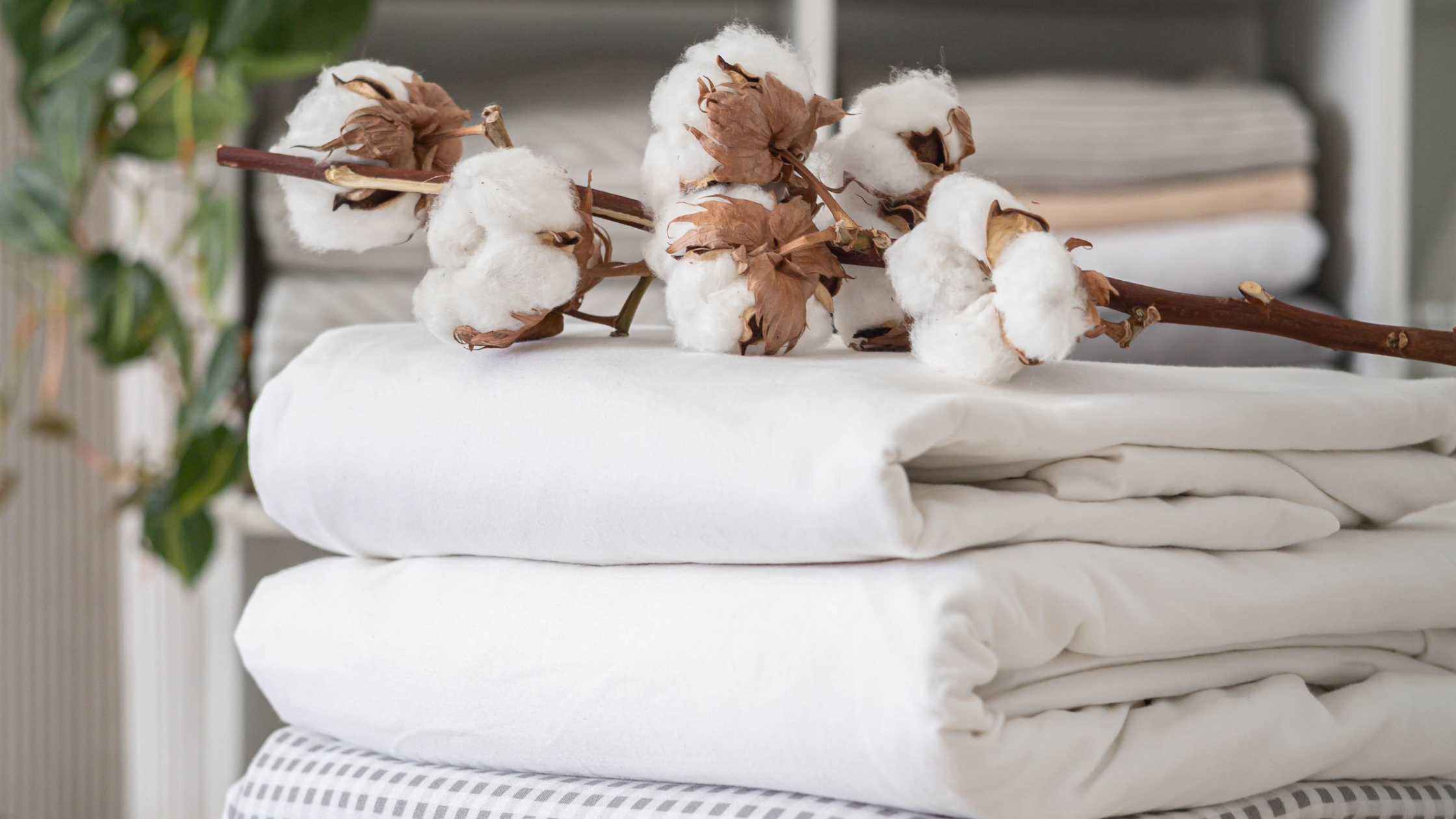
A bedding label can tell you almost everything you need to know. The problem is that most of us were never taught how to read one. We were taught to notice the color, the softness, the sale price, the pretty bedroom photo, the words “cooling,” “organic,” “bamboo,” “hotel quality,” “luxury,” or “buttery soft.” We were taught to trust the front of the package, the product title, the five-star reviews, or the brand story that makes the sheets sound like they were made for the most peaceful version of our lives.
But the real truth is usually lower on the page.
It is in the fiber content.
It is in the weave.
It is in the certification details.
It is in the care instructions.
It is in the return policy.
It is in the difference between what the marketing says and what the label actually proves.
This matters because bedding is not just decoration. It touches your skin for hours. It holds your body heat. It absorbs sweat, skincare, detergent residue, and the ordinary evidence of being human. It affects how the bed feels when you first get in and how it feels at 3 a.m. when the body is warmer, the pillowcase is damp, or the sheet suddenly feels less breathable than it did in the package.
For women in midlife, this becomes even more important.
If you are dealing with warmer sleep, night sweats, dry skin, sensitive skin, or sleep that feels more easily interrupted than it used to, bedding can no longer be chosen only by how it looks. It has to work. It has to breathe. It has to wash well. It has to feel right against the body you are sleeping in now.
That does not mean you need to become a textile expert.
It means you need to become harder to mislead.
A bedding label is not there to take the beauty out of shopping. It is there to help you see past the words that sound good and find the details that matter.
So before you buy another sheet set, quilt, duvet cover, blanket, or pillowcase, start here.
The product title is not the label
The first mistake many shoppers make is treating the product title like the truth.
A product title is marketing.
The label is information.
A sheet set may be called bamboo luxury cooling sheets, but the actual fiber content may say 100 percent viscose from bamboo. A duvet cover may be called organic cotton, but the details may show that only the outer shell is organic cotton while the fill or other components are something else. A blanket may be described as natural, but the label may reveal a cotton and polyester blend.
This is why you should never stop at the title.
The title is designed to catch your attention.
The label is where the product has to become more specific.
When shopping online, scroll past the opening description. Look for sections called materials, details, specifications, composition, fabric content, product information, or care. That is where you usually find the truth.
On packaging, look for the sewn-in label, the paper insert, or the product tag. If a brand does not make fiber content easy to find, that tells you something too.
A transparent brand does not make you work too hard to understand what you are buying.
Start with fiber content
Fiber content is the first thing to read because it tells you what the bedding is actually made of.
This is different from what the bedding is called.
The product may be marketed as bamboo, eucalyptus, cooling, organic, natural, luxury, hotel quality, or breathable. Those words may be helpful, but they are not the fiber content.
The fiber content will tell you whether the product is made from cotton, organic cotton, linen, flax, silk, wool, polyester, microfiber, viscose, rayon, lyocell, modal, TENCEL Lyocell, bamboo-derived viscose, or a blend.
This matters because each fiber behaves differently.
Cotton can be breathable, absorbent, familiar, crisp, smooth, or warm depending on the weave.
Linen can be airy, textured, relaxed, and breathable, but not everyone likes its feel.
TENCEL Lyocell can feel smooth, drapey, and moisture-friendly, but it is not the same as cotton or linen.
Bamboo-derived viscose can feel silky and cool to the touch, but it is usually a regenerated fiber made from bamboo pulp, not raw bamboo fiber.
Polyester microfiber can feel soft and affordable, but many hot sleepers find it less breathable.
Wool can help with moisture and temperature in certain bedding layers, but it depends on the product.
Silk can feel smooth and delicate, but it may require more care.
Blends can be useful, but they change how the bedding performs.
A label that says 100 percent cotton is different from one that says 60 percent cotton and 40 percent polyester. A label that says 100 percent TENCEL Lyocell is different from one that says lyocell blend. A label that says viscose from bamboo is different from one that simply says bamboo in the product title.
Fiber content is the foundation.
Read it first.
Be careful with beautiful plant words
Bedding marketing loves plant words.
Bamboo.
Eucalyptus.
Cotton.
Flax.
Botanical.
Plant-based.
Natural.
Earth-friendly.
Clean.
These words create a feeling before you ever touch the fabric. They can be useful, but they can also soften the truth.
Bamboo is one of the clearest examples.
Many people hear bamboo and imagine the sheet is made directly from bamboo fiber in a simple natural way. In many cases, the actual label says viscose from bamboo or rayon made from bamboo. That means bamboo may be the plant source, but the finished fiber has been manufactured through a process that transforms bamboo cellulose into a regenerated fiber.
That does not automatically make the bedding bad. Some bamboo-derived sheets are very soft and comfortable. But the label should be clear.
The same is true with eucalyptus. A product may use eucalyptus language because the fiber is TENCEL Lyocell or another lyocell made from wood-based cellulose. But eucalyptus is not the fiber name. Lyocell is the fiber category. TENCEL is a brand name for fibers made by Lenzing.
Pretty words can be true and incomplete at the same time.
Your job as a shopper is to translate the romance into the material.
When you see bamboo, ask: is it viscose, rayon, lyocell, or a blend?
When you see eucalyptus, ask: is it TENCEL Lyocell, generic lyocell, or just marketing language?
When you see plant-based, ask: what plant, what fiber, and what process?
When you see natural, ask: natural in what way?
The label should answer.
Understand blends before you dismiss them or trust them
A blend means the fabric contains more than one fiber.
Blends are not automatically bad. They can improve stretch, durability, wrinkle resistance, price, drape, or care. But they can also change breathability, temperature, feel, and how the fabric behaves after washing.
A cotton and polyester blend will not feel or breathe exactly like 100 percent cotton.
A linen and cotton blend may feel softer and less wrinkly than pure linen, but it may not have the same airy texture.
A TENCEL and cotton blend may offer smoothness and structure together.
A bamboo-derived viscose and polyester blend may feel soft, but it may not perform the way someone expects from a fully plant-derived sheet.
A small amount of elastane or spandex may be used for stretch, especially in certain fitted sheets, mattress protectors, or jersey fabrics.
The important thing is not to panic when you see a blend.
The important thing is to know why it is there.
Ask:
What fibers are blended?
What percentage is each fiber?
Does the blend support comfort, or is it mostly lowering cost?
Will it sleep warmer than a 100 percent natural or cellulosic option?
Will it make the fabric easier to care for?
Does the brand explain the benefit of the blend?
A blend should not be hidden behind vague language. If a product is blended, the label should say so clearly.
Look beyond “cotton”
Cotton is familiar, but cotton alone does not tell you enough.
A label may say 100 percent cotton, but that still leaves many questions.
Is it organic cotton?
Is it long-staple cotton?
Is it Supima cotton?
Is it Egyptian cotton?
Is it upland cotton?
Is it percale?
Is it sateen?
Is it jersey?
Is it flannel?
Is it muslin or gauze?
Is it brushed?
Is it garment washed?
Is it wrinkle-resistant?
Cotton can feel crisp, silky, cozy, stretchy, airy, or dense depending on how it is made. That is why two cotton sheets can feel completely different.
If you sleep hot, cotton percale may be more appealing because it often feels crisp, matte, and breathable.
If you want something smoother and more drapey, cotton sateen may feel better, though some sleepers find it warmer.
If you want cozy winter bedding, flannel may make sense.
If you want a relaxed, airy layer, gauze or muslin may be worth exploring.
If you want a T-shirt feel, jersey may appeal to you, although it can feel clingy to some hot sleepers.
The word cotton begins the conversation.
The weave and construction finish it.
Learn the difference between percale and sateen
Percale and sateen are two of the most common cotton sheet weaves, and understanding them can save you from buying the wrong kind of sheet.
Percale is usually crisp, matte, breathable, and light. It often appeals to hot sleepers and people who like a fresh, hotel-like bed. It may wrinkle more, and it may feel slightly crisp at first before softening with washing.
Sateen is usually smoother, silkier, more lustrous, and more drapey. It often feels softer right away and may look more polished on the bed. It can also feel warmer or heavier to some sleepers.
Neither is better for everyone.
If your body runs warm, start with percale.
If your skin wants smoothness and you do not overheat easily, sateen may be lovely.
If you want softness and coolness, look carefully at weight, thread count, and reviews after washing. Sometimes a lightweight sateen can work. Sometimes a dense percale may not feel as airy as expected.
The weave helps you predict the experience before you buy.
Thread count is a clue, not a verdict
Thread count has been treated like the crown jewel of bedding quality for far too long.
It is not useless, but it is often overused.
Thread count tells you how many threads are woven into a certain area of fabric. It does not tell you the quality of the cotton, the staple length, the yarn strength, the weave, the finishing, the breathability, or whether the sheet will feel good after washing.
A very high thread count sheet may sound luxurious, but it can also feel dense or warm. For hot sleepers, higher is not always better.
A moderate thread count percale made with good cotton may feel cooler and more breathable than a very high thread count sheet made with lower quality yarns.
A sateen sheet may use thread count to emphasize smoothness, but the number alone will not tell you whether it will pill, snag, or sleep warm.
Read thread count as one piece of information.
Never let it make the whole decision.
Better questions are:
What fiber is used?
What is the weave?
Is the fabric lightweight or dense?
What do reviews say after washing?
Does the sheet sleep cool or warm?
Does the brand explain quality beyond thread count?
Luxury is not always the highest number. Sometimes luxury is a sheet that helps you wake up dry and comfortable.
Check whether “organic” is verified
The word organic can be meaningful, but only when it is clear.
Organic cotton usually refers to cotton grown according to organic agriculture standards. But a finished bedding product may involve many steps after the cotton is grown, including spinning, weaving, dyeing, finishing, cutting, sewing, and packaging.
That is why certification matters.
If a product says organic cotton, look for the details. Does it say GOTS certified? Does it say Organic Content Standard certified? Does it list a license number? Does it explain whether the entire product is certified or only the fiber?
GOTS is one of the most recognized organic textile standards. Its “organic” label grade requires at least 95 percent certified organic fibers, while “made with organic” requires at least 70 percent certified organic fibers.
That difference matters.
Organic is not the same as made with organic.
An organic cotton shell is not the same as a fully organic comforter.
A product with organic cotton on the surface may still have synthetic fill or a waterproof layer.
A sheet set may be simpler, but quilts, comforters, mattress pads, and protectors need closer reading.
When you see organic, ask:
Organic what?
What percentage?
Certified by whom?
Does the certification apply to the whole product?
Is it organic cotton, or just organic language?
A trustworthy brand will make this clear.
Know what OEKO-TEX does and does not mean
OEKO-TEX STANDARD 100 is a helpful certification, but it is often misunderstood.
It means the textile has been tested for certain harmful substances according to the standard. That can be reassuring for products that touch the skin.
But OEKO-TEX STANDARD 100 does not mean the product is organic.
A polyester sheet can be OEKO-TEX certified.
A conventional cotton sheet can be OEKO-TEX certified.
A bamboo-derived viscose sheet can be OEKO-TEX certified.
An organic cotton sheet can also be OEKO-TEX certified.
The certification is about harmful substance testing, not organic fiber content.
That distinction is important.
If your priority is reducing concern about harmful substances in the finished textile, OEKO-TEX can be useful.
If your priority is verified organic cotton, look for GOTS or another organic content certification.
If your priority is breathability, you still need to look at fiber, weave, and weight.
If your priority is cooling, you still need to look at how the sheet performs in real sleep.
Certifications are helpful, but they each answer a specific question.
Do not ask one label to answer all of them.
Read the whole product if it has layers
Sheets are usually easier to understand because they are often one fabric.
Other bedding can be more complicated.
A quilt may have a front fabric, back fabric, inner batting, stitching, and binding.
A comforter may have a shell and fill.
A duvet insert may have outer fabric, fill, baffles, stitching, and sometimes treatments.
A mattress protector may have a top fabric, backing layer, waterproof membrane, skirt, elastic, and sometimes synthetic barriers.
A pillow may have cover fabric, fill, inner liner, and treatment.
This is where people get misled.
A product may say organic cotton because the cover is organic cotton, but the fill may be polyester. A mattress protector may say cotton surface but include a polyurethane waterproof layer. A quilt may have a cotton shell but synthetic batting. A comforter may be marketed as natural but include hidden construction details that matter.
None of this automatically makes the product bad.
But it does mean you should know what every layer is made of.
For bedding that has multiple components, look for:
Shell material.
Fill material.
Backing material.
Waterproof layer.
Elastic or skirt material.
Thread or stitching details, if available.
Certifications for the whole product or specific components.
Care instructions.
A layered product should have layered transparency.
Look at the care instructions before you fall in love
Care instructions are not the most exciting part of bedding, but they matter.
A sheet can be beautiful and still be wrong for your life if it requires more care than you are willing to give.
Some bedding should be washed cold.
Some should be dried low.
Some should not be bleached.
Some should not be washed with fabric softener.
Some should be line dried.
Some should be removed from the dryer promptly.
Some may shrink if exposed to high heat.
Some delicate fabrics may need more careful handling.
This matters even more if you deal with night sweats, hot flashes, pets, children, frequent washing, body oils, skincare products, or sensitive skin. Bedding that needs gentle care may still be worth it, but you need to know that before buying.
Ask yourself:
Can I wash this the way the brand recommends?
Will I need to wash it often?
Can it handle repeated laundering?
Will low heat work for me?
Does it wrinkle easily?
Does it require special detergent?
Will this care routine become annoying?
The right bedding should fit your real life, not your fantasy laundry routine.
Watch for fabric softener warnings
Many bedding brands advise against fabric softeners, and that advice is worth noticing.
Fabric softeners and dryer sheets can coat fibers. That coating may change the feel of the fabric and can affect absorbency or breathability over time. For people who sleep hot or sweat at night, that matters.
A sheet that is supposed to manage moisture may not perform as well if it is coated in residue.
A towel becomes less absorbent with buildup. Bedding can be affected too.
This is not about making laundry complicated. It is about keeping the fabric honest.
Use a gentle detergent.
Avoid using too much detergent.
Consider fragrance-free options if your skin is sensitive.
Avoid heavy softeners if breathability and moisture comfort matter to you.
Do not overload the washer.
Dry according to the care label.
How you care for bedding can change how it performs.
Check the mattress depth
This is practical and often overlooked.
A fitted sheet can be made from beautiful fabric and still be a bad purchase if it does not fit your mattress properly.
Before buying sheets, check your mattress depth. Include any mattress topper or pad you use. A deep mattress, pillow-top mattress, or added topper may need deep-pocket sheets.
Look for pocket depth in the product details.
Also look for comments about the elastic.
Does the fitted sheet stay on?
Does it pop off the corners?
Is the elastic all around or only at the corners?
Does it fit after washing?
Do reviewers mention shrinking?
A sheet that slides off the bed will irritate you no matter how good the fiber is.
Fit is part of quality.
Read the return policy before you buy
Bedding is personal.
You can read every label correctly and still discover that a sheet does not feel right once you sleep on it. Maybe it is too warm. Maybe it is too crisp. Maybe it feels too slippery. Maybe the color looks different in your room. Maybe your skin does not like the finish. Maybe the fitted sheet does not stay put.
This is why return policies matter.
Before buying, ask:
Can I return it after opening?
Can I return it after washing?
Is there a sleep trial?
How many days do I have?
Is there a restocking fee?
Do I pay return shipping?
Are final sale items returnable?
What happens if the product shrinks, pills, or arrives defective?
Do not assume premium brands have generous policies. Some do. Some do not.
A clear return policy shows confidence and respect. A confusing return policy should slow you down.
This is especially important when trying a new fiber, such as linen, TENCEL, bamboo-derived viscose, or a different cotton weave. You may not know your preference until you actually sleep in it.
Read reviews like a detective
Reviews can be useful, but only if you know what to look for.
Do not rely only on reviews that say “so soft” or “beautiful color.” Those are first impressions. They are not enough.
Look for reviews that mention real use.
After washing.
After several months.
During summer.
For hot sleepers.
For night sweats.
For sensitive skin.
With pets.
With a deep mattress.
With frequent laundering.
Look for patterns.
If several people mention pilling, pay attention.
If several people say the sheet sleeps hot, pay attention.
If several people say the fitted sheet shrank, pay attention.
If several people say the fabric softened beautifully after washing, that is useful.
If hot sleepers consistently love it, that matters.
If hot sleepers consistently return it, that matters too.
Also notice who is reviewing.
A cold sleeper may love a sheet that feels too warm for you. Someone who loves silky bedding may praise a sheet you would find slippery. Someone who hates wrinkles may complain about linen or percale even if the fabric performs well.
Reviews are not instructions. They are clues.
Use them carefully.
Translate common marketing words
Marketing words are not always meaningless. But they often need translation.
Cooling may mean cool to the touch, breathable, moisture-wicking, lightweight, or simply marketed to hot sleepers. Look for the reason behind the claim.
Organic may mean certified organic fiber, made with organic material, organic cotton shell, or just vague organic language. Look for the certification and percentage.
Bamboo usually means viscose or rayon made from bamboo, unless the label says something more specific.
Eucalyptus may refer to TENCEL Lyocell or another lyocell, but it is not enough by itself.
Hotel quality usually suggests crispness, smoothness, whiteness, or a polished look, but it does not tell you fiber quality.
Luxury may describe price, packaging, hand feel, photography, or actual textile quality. Read the label.
Breathable should be supported by fiber, weave, weight, or construction.
Moisture-wicking should explain how the fabric moves moisture.
Natural should tell you which fiber and whether it is blended.
Chemical-free is too vague in most textile conversations. Look for specific standards or testing.
Non-toxic should be supported by a recognized certification or clear explanation.
Wrinkle-free may suggest a finish or treatment. Decide whether that matters to you.
Buttery soft usually tells you the sheet is designed for softness, not necessarily breathability or durability.
Eco-friendly should be backed by sourcing, processing, certification, durability, or measurable claims.
When the words are big and the details are small, slow down.
Red flags on a bedding label or product page
Some signs should make you pause before buying.
No fiber content listed.
Only vague words like natural, clean, or luxury.
Bamboo used without saying viscose, rayon, lyocell, or blend.
Organic claims without certification details.
OEKO-TEX presented as if it proves organic status.
Cooling claims with no explanation of fiber, weave, weight, or moisture performance.
Very high thread count used as the main quality claim.
No care instructions.
No return policy or a very restrictive one.
No mention of shell and fill on quilts or comforters.
Product photos that show beauty but provide little material information.
Reviews that mention pilling, shrinking, heat, or poor customer service repeatedly.
A brand that makes you search too hard for the basics.
A label should bring clarity.
If it creates more confusion, that is information too.
Green flags to look for
Some signs suggest a brand is taking transparency seriously.
Clear fiber content.
Exact percentages for blends.
Actual fiber names, not only plant words.
Weave listed clearly.
Certifications explained accurately.
GOTS or organic claims supported by label grade or license details.
OEKO-TEX described as harmful substance testing, not organic proof.
Separate shell and fill details for layered bedding.
Care instructions that are easy to find.
Realistic language around cooling and comfort.
Reviews available after washing and longer use.
A reasonable return policy.
Product photos that show texture, drape, and fit.
Customer service that can answer material questions.
Transparency does not guarantee perfection, but it makes trust easier.
How to compare two similar products
When comparing two sheet sets, do not start with price alone.
Start with the label.
Product A may cost less, but it may be a cotton and polyester blend instead of 100 percent cotton.
Product B may cost more, but it may use long-staple organic cotton and have GOTS certification.
Product A may claim cooling because it feels silky.
Product B may actually use a lighter percale weave.
Product A may have beautiful packaging.
Product B may have better care instructions, clearer sourcing, and better reviews after washing.
Create a simple comparison:
Fiber content.
Weave.
Thread count or fabric weight, if relevant.
Certifications.
Care instructions.
Return policy.
Reviews after washing.
Price.
This helps you decide whether a higher price reflects better materials or simply better marketing.
The goal is not always to buy the most expensive option.
The goal is to buy the option whose details match your needs.
How to read a sheet label
For sheets, focus on:
Fiber content.
Weave.
Thread count.
Pocket depth.
Certifications.
Care instructions.
Return policy.
Reviews after washing.
If you sleep hot, pay close attention to weave and weight. Cotton percale, linen, TENCEL Lyocell, and certain bamboo-derived fabrics may be worth considering, depending on your texture preference.
If you have sensitive skin, look for smoothness, testing certifications, minimal finishes, and a laundry routine that avoids fragrance and buildup.
If you want durability, look beyond softness. Look for fiber quality, construction, and long-term reviews.
A sheet needs to feel good and survive the wash.
How to read a quilt label
For quilts, read every layer.
Front fabric.
Back fabric.
Fill or batting.
Stitching.
Binding.
Certifications.
Weight.
Care instructions.
A quilt may have a cotton shell and polyester fill. It may be 100 percent cotton inside and out. It may be organic cotton on the surface only. It may be lightweight or heavy. It may be machine washable or dry clean only.
For hot sleepers, the fill matters as much as the shell. A breathable cover can still sleep warm if the fill traps heat.
Also look at stitching. Loose stitching, weak seams, or decorative areas that fall apart after washing are quality concerns.
A quilt is not just something that looks beautiful folded at the foot of the bed. It has to hold up to use.
How to read a duvet or comforter label
For duvets and comforters, the shell and fill are everything.
The shell may be cotton, organic cotton, polyester, TENCEL, silk, or a blend.
The fill may be down, feather, wool, cotton, silk, kapok, polyester, down alternative, or another material.
The fill changes warmth, weight, breathability, loft, care, and price.
A comforter marketed as cotton may only have a cotton shell. A down alternative comforter may use polyester fill. A cooling comforter may still be too warm if the fill is thick or dense.
Look for fill power if buying down.
Look for fill weight if available.
Look for warmth level.
Look for whether it is meant for summer, all-season, or winter.
Look for whether it can be washed at home.
If you are in a season of night sweats, be careful with thick duvets. A lighter quilt, blanket, or coverlet may give you more flexibility.
How to read a mattress protector label
Mattress protectors are often the hidden reason a bed sleeps hot.
Read the surface fabric.
Read the backing.
Read the waterproof layer.
Read whether it is waterproof or water-resistant.
Read whether it has a polyurethane membrane or another barrier.
Read whether the skirt is synthetic.
Read whether it is breathable.
Read reviews from hot sleepers.
A waterproof protector can be useful, especially if you sweat at night, but some protectors trap heat and moisture. If your sheets are breathable but you still wake up hot underneath, the protector may be part of the problem.
Do not ignore the layer under the sheet.
It may be changing the entire bed.
Match the label to your sleep problem
Before you buy, name the problem you are trying to solve.
If you sleep hot, look for breathable fibers, lighter weaves, lower density, moisture comfort, and lighter layers.
If you wake up damp, focus on moisture management, drying comfort, and whether the fabric clings.
If your skin is sensitive, focus on fiber content, texture, certifications, dyes, finishes, and laundry.
If your sheets wear out quickly, focus on fiber quality, construction, reviews after washing, and care.
If your fitted sheet keeps coming off, focus on pocket depth, elastic, shrinkage, and mattress thickness.
If your bed looks beautiful but feels heavy, focus on weight, fill, and layering.
If you are confused by organic claims, focus on certification, percentage, and whether the finished product is certified.
The right label detail depends on the real issue.
Do not buy a solution for a problem you do not have.
A simple label-reading routine
Before buying bedding, follow this order:
First, read the fiber content.
Second, check the weave or construction.
Third, look at percentages if it is a blend.
Fourth, check certifications and what they actually mean.
Fifth, read care instructions.
Sixth, check fit, size, pocket depth, and product components.
Seventh, read reviews after washing.
Eighth, review the return policy.
Ninth, compare the marketing language to the actual label.
If the marketing and the label match, that is a good sign.
If the marketing says one thing and the label quietly says another, listen to the label.
The label is where the truth usually sits.
The bedding label checklist
Before you buy, ask:
What is this actually made of?
Is it 100 percent one fiber or a blend?
Are the fiber names specific?
Does bamboo mean viscose, rayon, or lyocell?
Does eucalyptus mean TENCEL Lyocell or something else?
Is the cotton organic, conventional, long-staple, percale, or sateen?
Is the product certified?
Does the certification prove what the marketing implies?
Does OEKO-TEX mean harmful substance testing, not organic?
Does GOTS apply to the finished product?
What percentage of the fibers are certified organic?
What is the weave?
What is the weight?
Will it sleep cool or warm?
Will it feel crisp, silky, textured, stretchy, or cozy?
Can I wash it the way it needs to be washed?
Will it work with my mattress depth?
Does it have hidden layers, fill, or backing?
What do reviews say after washing?
Can I return it if it does not work for me?
Does the product page educate me or just persuade me?
These questions do not make shopping harder.
They protect you from buying a feeling instead of a fabric.
The honest bottom line
A bedding label is not just a tag.
It is a map.
It tells you what the product is made of, how it may feel, how it may sleep, how it should be cared for, and whether the brand is being clear or vague. It helps you separate actual information from beautiful language.
This matters because bedding is intimate. It touches your skin, holds your heat, absorbs your sweat, and becomes part of your sleep environment night after night.
For women in midlife, that environment can matter even more. When sleep is interrupted, when the body feels warmer, when skin feels more sensitive, when the old bedding no longer works the way it used to, the label becomes a tool. It helps you choose with more care.
You do not need to memorize every textile term.
You do not need to become suspicious of every brand.
You do not need to spend the most money.
You simply need to slow down long enough to ask better questions.
What is this made of?
How is it woven?
What is certified?
What is only marketing?
How does it wash?
Will it work for the way I sleep now?
That last question is the one that matters most.
Because the best bedding is not the bedding with the prettiest promise.
It is the bedding that tells the truth before you buy it and still feels good after you sleep in it.
Discover more from Sleep Lately
Subscribe to get the latest posts sent to your email.