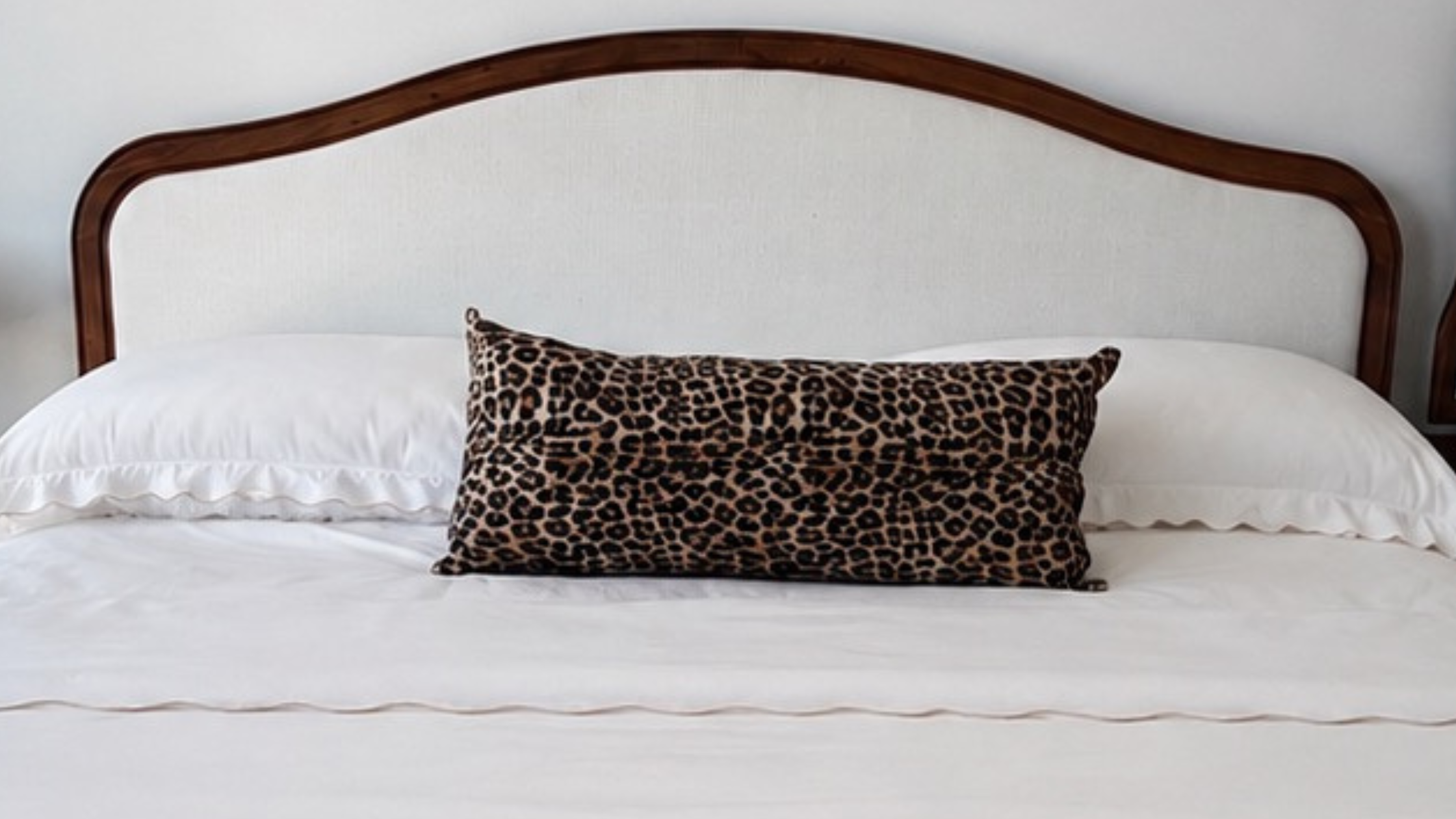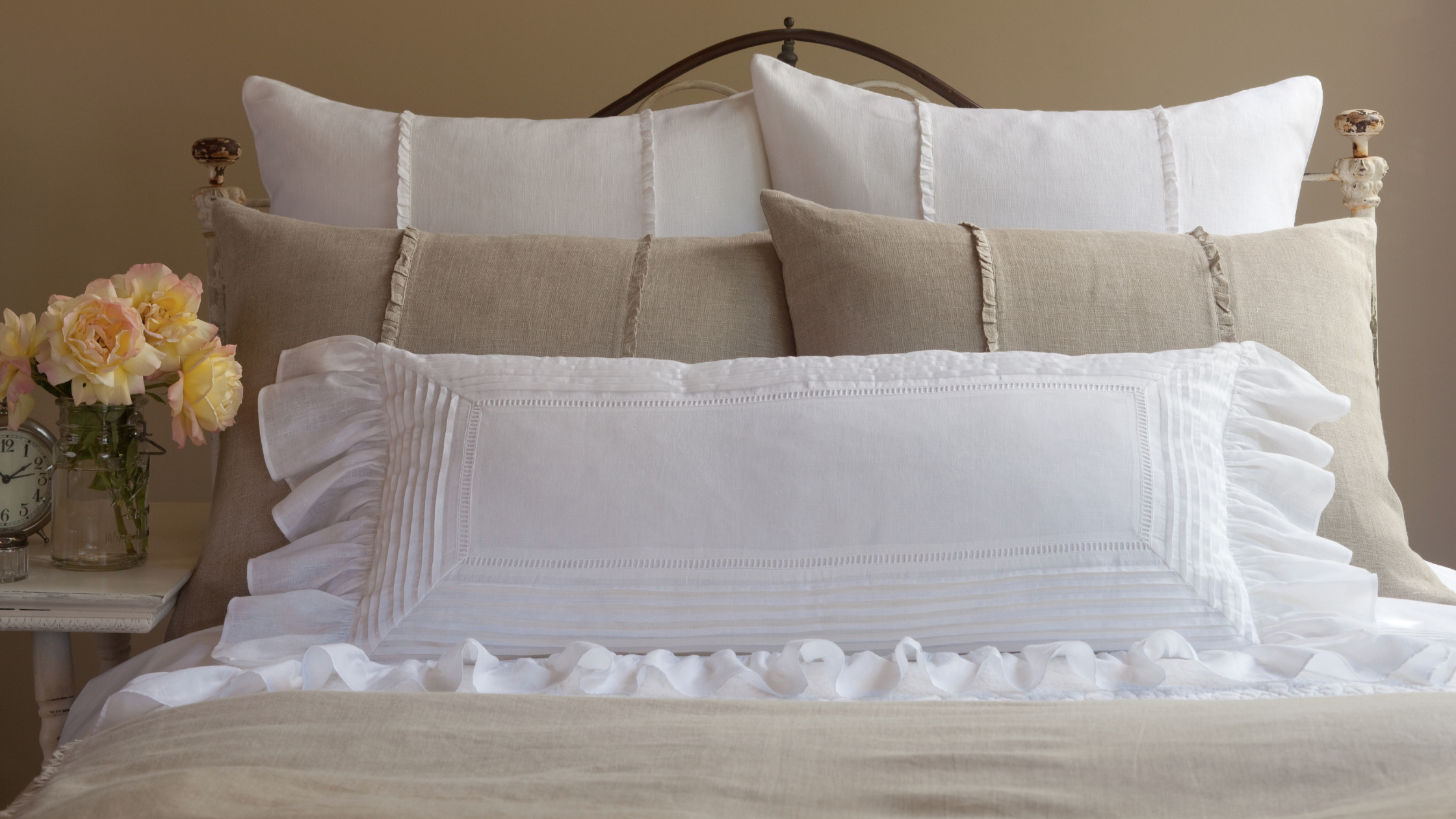
There is a certain kind of confidence that comes from making the bed with something beautiful.
The room looks softer. The light hits differently. The bed suddenly feels less like the place where you collapse at the end of the day and more like a place you are being invited back to. For women in midlife, especially those of us dealing with disrupted sleep, night sweats, early morning wakeups, temperature changes, or just the mental load of life, the bedroom starts to matter in a new way. Not because bedding can solve everything. It cannot.
A sheet set is not a sleep disorder treatment. A quilt is not going to magically erase stress, hormones, insomnia, or the hundred thoughts that like to show up at 3 AM. But I do believe our sleep environment speaks to our nervous system. I believe softness matters. Breathability matters. Weight matters. Texture matters. The feeling of getting into a bed that has been prepared with care matters.
And that is what started this bedding series.
I wanted to compare bedding beyond the usual online language: “buttery soft,” “luxury feel,” “hotel quality,” “cooling,” “breathable,” “premium,” “organic,” and “worth the money.” These phrases are everywhere. They sound beautiful, but after a while, they start to mean very little unless someone is willing to actually use the products, wash them, sleep in them, make the bed with them, and talk honestly about what premium really feels like in real life.
So I bought five bedding pieces to begin a comparison series.
Not all of them are in the same category. Not all of them are at the same quality level. And that is exactly why I chose them.
I did not want a series where everything was luxury and perfect. I wanted contrast. I wanted to compare what looks pretty online with what feels substantial in person. I wanted to see the difference between natural fibers, plant-derived fabrics, silk fill, cotton, recycled polyester fill, and the kind of bedding that photographs beautifully but may or may not perform beautifully.
The question guiding this series is simple:
Is it premium, or is it just pretty?
Why I Am Looking at Bedding Differently Now
At a certain point in life, sleep becomes less automatic.
There was a time when many of us could fall asleep anywhere. On a sofa. Under a cheap blanket. In a room that was too bright, too warm, too cluttered, or too loud. Then midlife arrives, and suddenly sleep asks for more from us. The body becomes more sensitive. Temperature changes become more noticeable. Fabric that once felt fine can suddenly feel irritating. Heavy bedding can feel suffocating. Lightweight bedding can feel too flimsy. A room that used to be “good enough” may no longer support the kind of rest we actually need.
That is where this series begins.
Not from perfection. Not from pretending bedding is the answer to everything. But from the idea that our bedrooms deserve to be studied a little more honestly.
I want to know which bedding feels luxurious in a practical way. Which one holds up after washing. Which one feels cool but not cold. Which one looks expensive but feels average. Which one feels beautiful on the skin. Which one is more style than substance. Which one is truly worth buying, and which one is better used as a comparison point for learning.
For this first round, I purchased:
- The Birch Lane Yoren Cotton Duvet Cover Set
- The Eucalypso Sleep Bundle
- The Aeptom Organic Bamboo Scallop Sateen Bed Sheet Set
- The Aeptom Double Cocoon Mulberry Silk-Filled Quilt
- The Quince Bamboo Dream Quilt Set
Each one brings something different to the conversation.

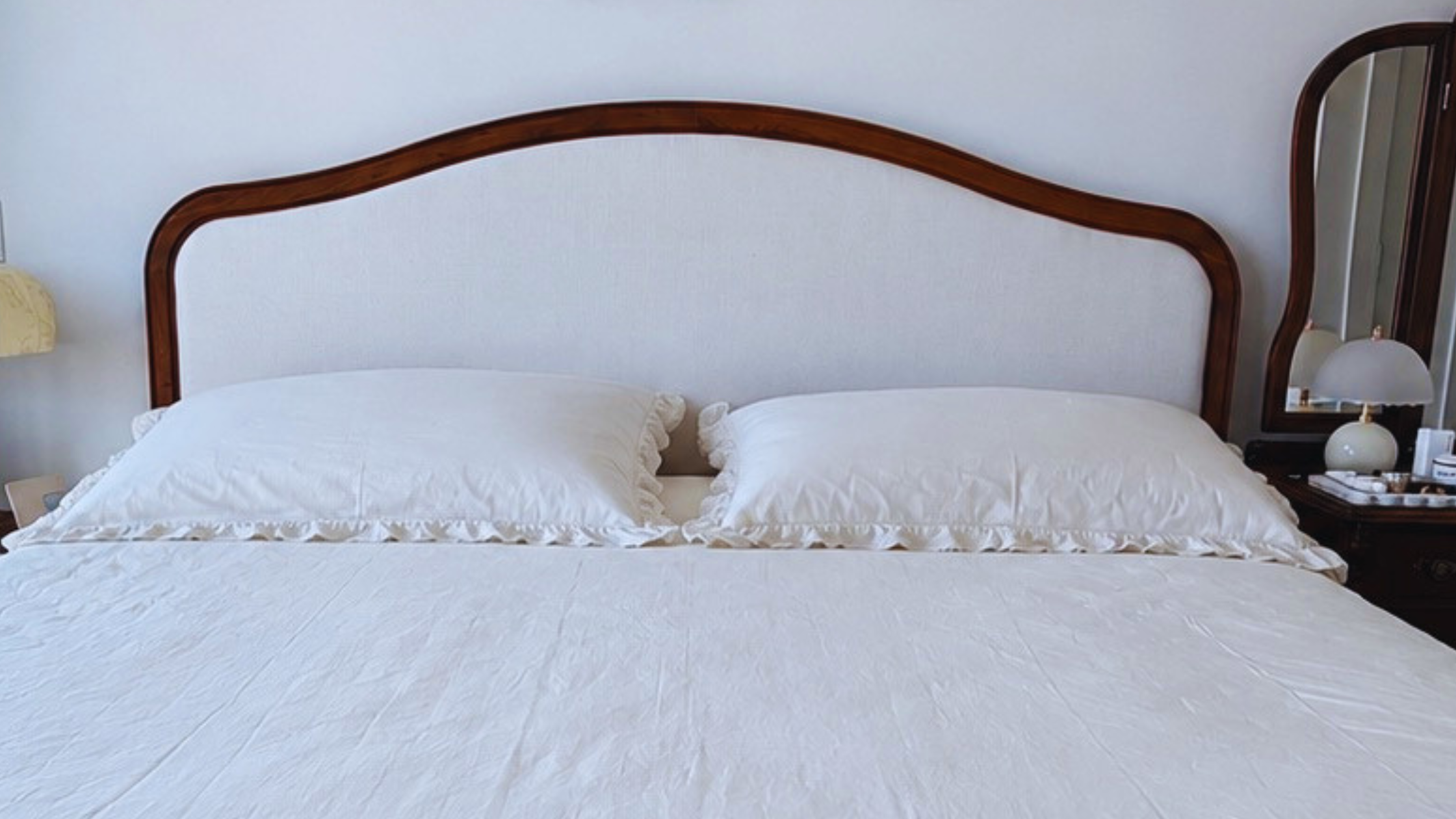
1. Birch Lane Yoren Cotton Duvet Cover Set: The Pretty Traditional Option
The Birch Lane Yoren duvet cover set is the piece I would call the “pretty traditional” option in this comparison.
It has that soft, romantic, ruffled white bedding look that many people love. Visually, it gives the bedroom a gentle, cottage-inspired, feminine feeling. It is the kind of bedding that photographs well because it has texture and movement. The ruffle detail gives it personality without needing a strong color or bold pattern.
But this is where the series becomes interesting.
Pretty does not automatically mean premium.
This set is made from cotton, which is a positive starting point because cotton is familiar, breathable, and generally easy to live with. But not all cotton bedding is created equally. Cotton quality depends on the type of cotton, fiber length, weave, finishing, construction, and durability. A basic cotton duvet cover can be perfectly useful and lovely, but that does not necessarily place it in the premium category.
For me, this purchase is important because it gives the series a baseline. It represents the kind of bedding many people might choose because it is attractive, accessible, and easy to understand. It may not be the most luxurious option in the group, but it has a role: it helps answer the question of whether a pretty cotton duvet cover can still feel elevated enough for someone who wants a softer, more intentional bedroom.
This is the set I will be watching closely for construction and feel.
Do the ruffles look charming or flimsy in person? Does the cotton feel crisp, thin, soft, rough, breathable, or average? Does it wash well? Does it wrinkle in a way that feels relaxed and beautiful, or does it look tired after one laundry cycle? Does it make the bed feel cozy, or does it mainly serve the look?
My early expectation is that Birch Lane will fall into the intermediate category rather than true premium. But that does not make it a bad purchase. Sometimes intermediate bedding has a real place, especially when it delivers beauty, easy care, and comfort at a more approachable level.
The question is whether it feels thoughtfully made or simply decorative.

2. Eucalypso Sleep Bundle: The Cooling Performance Option
The Eucalypso Sleep Bundle is a different kind of purchase.
This one is less about traditional cotton luxury and more about modern sleep performance. Eucalypso uses TENCEL™ Lyocell, often associated with softness, smoothness, moisture management, and a cooler feel against the skin. This immediately makes it interesting for women in midlife because temperature changes can become one of the biggest sleep disruptors.
For many women, the problem is not just falling asleep. It is staying comfortable through the night.
You may go to bed feeling fine and wake up hot. You may throw the covers off, then feel cold. You may start noticing that certain fabrics cling to the skin or trap warmth in a way they never used to. So when a brand positions itself around cooling, breathability, and comfort, I pay attention — but I also want to test whether the experience matches the promise.
The Eucalypso bundle includes multiple bedding essentials, which makes it useful for a full-bed experience. That matters because sometimes a sheet set may feel good on its own, but the overall sleep environment depends on how the sheets, duvet cover, pillowcases, and layers work together.
This is the product I would place in the “premium performance” category.
It may not have the old-world luxury of silk fill or the classic prestige of long-staple cotton, but it has a modern luxury angle: softness, cooling, drape, and skin comfort. For someone who sleeps warm or wants bedding that feels smooth and light, this could be one of the most relevant purchases in the group.
But I will be looking at the details.
Does it feel cool only for the first five minutes, or does it stay comfortable overnight? Does the fabric feel silky in a pleasant way or slippery in a way that makes the bed harder to style? Does it wrinkle easily? Does it breathe well? Does it feel delicate or durable? Does it feel like a true upgrade from standard bedding?
Eucalypso has the potential to be one of the strongest options for midlife sleep comfort, especially for those who prioritize cooling and softness. But comfort claims need to be lived in, not just read online.

3. Aeptom Organic Bamboo Scallop Sateen Sheet Set: The Elegant Softness Option
The Aeptom Organic Bamboo Scallop Sateen Sheet Set is the kind of purchase that immediately brings the word “elegant” to mind.
The scalloped edge gives it a refined detail that feels more intentional than basic bedding. It is not loud. It is not overly trendy. It has that quiet, polished look that can make a bedroom feel grown, calm, and well cared for.
This is also where I want to be precise with language.
A lot of bedding is marketed as “bamboo,” but most soft bamboo bedding on the market is actually viscose or rayon made from bamboo. That distinction matters. It does not mean the bedding cannot feel beautiful. It does not mean it cannot be soft or breathable. But for an honest comparison series, I want to be careful not to use the word “bamboo” as if it automatically means untouched, raw, natural bamboo fiber.
What matters to me here is how the fabric performs.
Bamboo-derived viscose is often loved because it can feel silky, smooth, cool to the touch, and drapey. In a sateen weave, I expect this sheet set to feel softer and more fluid than crisp cotton. That could be wonderful for someone who wants a bed that feels gentle against the skin. It may also be a good option for people who do not like the crispness of percale or the heavier feel of some cotton sateen sheets.
The scalloped detail is what makes this product stand out visually. It gives the sheets a finished look, which matters if you are someone who cares about the bed looking beautiful when turned down. For video content, this detail will likely photograph well because it adds a soft design element without overwhelming the room.
In the comparison, I would consider this a premium-leaning sheet set.
The reason is not simply that it is soft. Softness alone is not enough. Plenty of inexpensive bedding feels soft at first and then pills, thins out, snags, shrinks, or loses its beauty after washing. The real test will be whether the softness feels substantial and whether the construction supports long-term use.
For this sheet set, I will be looking at the hand feel, the stitching, the scalloped edges, the depth of the fitted sheet, how it stays on the mattress, how the pillowcases are constructed, how the fabric behaves after washing, and whether the overall experience feels special enough to justify calling it premium.
There is a difference between a sheet that feels soft and a sheet that feels considered.
That is what I want to find out.
4. Aeptom Double Cocoon Mulberry Silk-Filled Quilt: The Most Luxurious Material Story
Of all the pieces in this first round, the Aeptom Double Cocoon Mulberry Silk-Filled Quilt has the strongest luxury material story.
Silk-filled bedding has a very different appeal from polyester-filled quilts or standard cotton coverlets. It is often chosen for being lightweight, smooth, breathable, and temperature responsive. A silk-filled quilt can feel luxurious without feeling heavy, which is exactly the kind of quality I am interested in for midlife sleep.
This purchase matters because it gives the series a true premium reference point.
When people hear “premium bedding,” they often think about price, softness, or brand name. But premium can also mean the quality of what is inside the bedding, not just what is touching the skin. Fill matters. A quilt can have a beautiful outer shell, but if the inside is synthetic or poorly distributed, the experience may not feel as elevated over time.
The Aeptom quilt uses a mulberry silk fill with a bamboo-derived viscose shell. That combination makes it especially interesting: smooth on the outside, naturally luxurious on the inside, and designed to feel lightweight rather than bulky.
For someone who sleeps hot, this could be a beautiful option if it delivers enough comfort without trapping too much warmth. For someone who likes a fluffy, heavy, cloud-like comforter, it may feel too light. That is why testing matters. Premium does not always mean perfect for everyone. Sometimes the best bedding depends on the type of sleeper you are.
I will be paying attention to weight, drape, loft, stitching, fill distribution, and whether it feels airy or too delicate. I also want to see how practical it is. Some luxury bedding sounds wonderful until you realize the care instructions are fussy, the fabric snags easily, or you become afraid to live with it.
My expectation is that this quilt may end up being one of the most premium pieces in the group, at least from a material standpoint. But the real question is whether that premium material translates into everyday comfort.
Does it feel luxurious at bedtime? Does it help with temperature comfort? Does it make the bed look elevated without too much effort? Does it feel like something you use and enjoy, or something you are scared to touch?
That is the kind of honesty I want this series to bring.

5. Quince Bamboo Dream Quilt Set: The Value-Premium Option
The Quince Bamboo Dream Quilt Set is probably the most interesting “middle” purchase in this group.
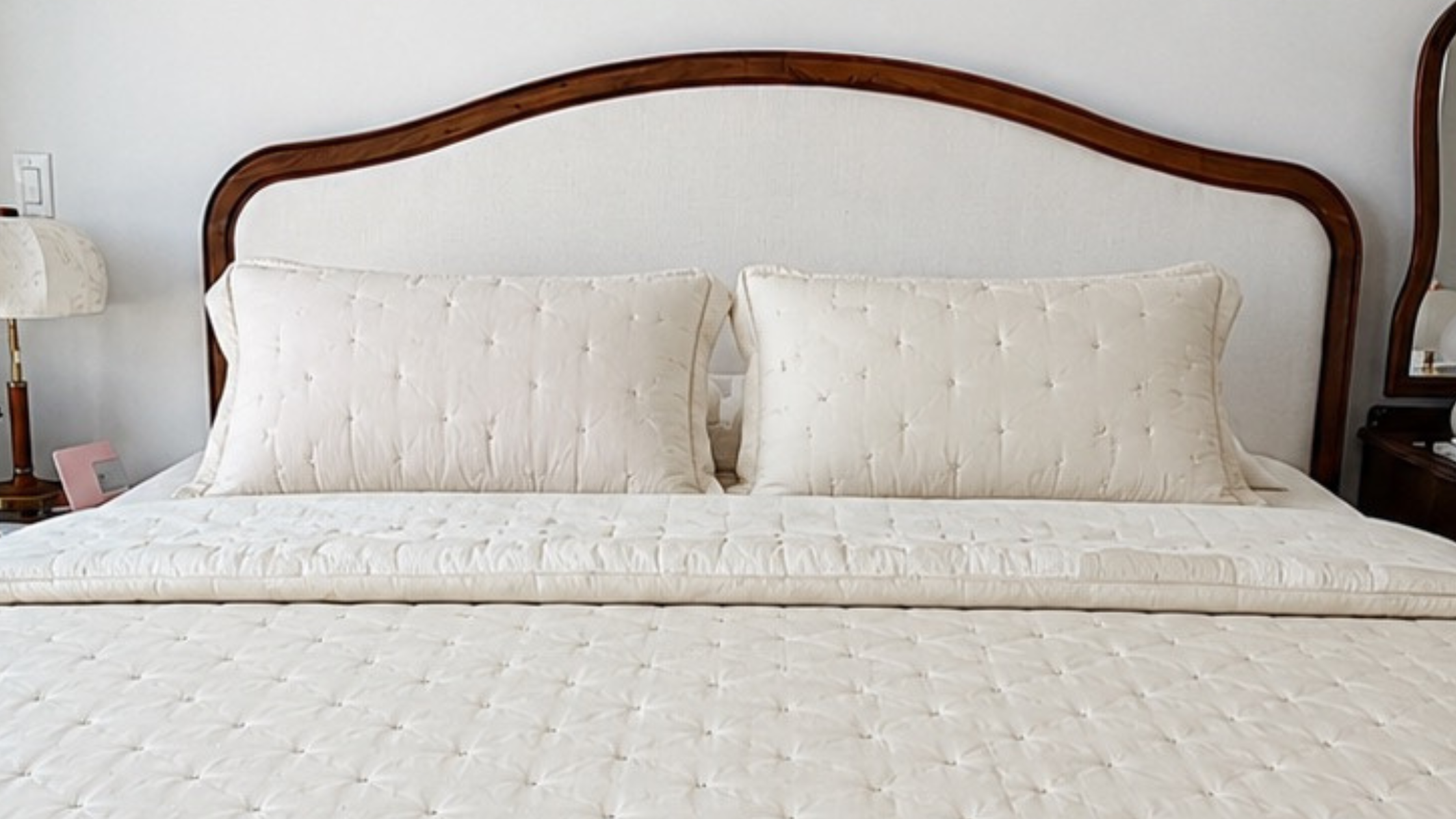
Quince has become known for offering elevated basics at more accessible prices, and this quilt set fits that conversation. It has the kind of clean, relaxed look that works well in a calm bedroom. In ivory, it gives that soft, neutral, expensive-looking bed aesthetic without being too fussy.
But this is also a perfect example of why I want to compare bedding carefully.
The outer shell is bamboo-derived viscose, which can give it that smooth, silky, cool-to-the-touch feeling many people love. But the fill is recycled polyester. That matters.
It does not mean the quilt is bad. In fact, recycled polyester fill can make the piece easier to care for, more affordable, and more accessible. It may also give the quilt a plushness or structure that some people enjoy. But if we are discussing “premium” in the strictest sense, a synthetic fill places it in a different category from silk-filled bedding or fully natural-fiber bedding.
That is why I would call Quince value-premium or intermediate-premium.
It may feel beautiful. It may look expensive. It may be a very smart buy. But I would not place it in the same material tier as a mulberry silk-filled quilt. The value proposition is different.
This is the kind of bedding I think many people will be curious about because it sits in the realistic shopping zone. Not everyone wants to spend luxury prices on every layer of the bed. Not everyone needs heirloom-level bedding. Sometimes people want something soft, pretty, neutral, comfortable, and better than what they had before.
That is a valid category.
The question for Quince is whether it delivers enough comfort and beauty to make it feel like a meaningful upgrade. I will be looking at softness, weight, stitching, warmth, breathability, how the recycled polyester fill behaves, and whether the ivory color keeps its beauty after use and washing.
This may not be the most premium piece in the series, but it could become one of the most practical.
And practical luxury is still worth talking about.
How I Will Judge the Bedding
For this series, I do not want to judge the bedding only by first impressions.
First impressions can be misleading. A sheet can feel amazing out of the package and disappointing after washing. A quilt can look beautiful folded at the end of the bed but sleep too hot. A duvet cover can photograph well but feel thin in person. A luxury item can be high quality but not right for your actual life.
So I will be using a few categories to compare each purchase.
Material quality: What is it actually made of? Cotton, TENCEL™ Lyocell, bamboo-derived viscose, silk fill, recycled polyester fill, or a blend? Is the language clear and transparent?
Feel on the skin: Does it feel crisp, silky, smooth, cool, heavy, slippery, cozy, breathable, or irritating?
Temperature comfort: Does it support a cooler sleep environment, or does it trap warmth?
Construction: How are the seams, buttons, closures, quilting, elastic, embroidery, and edges finished?
Ease of making the bed: Does it drape beautifully? Does it shift? Does it wrinkle? Does it make the room look calm and pulled together?
Care and durability: How does it wash? Does it shrink, pill, wrinkle excessively, lose shape, or become softer over time?
Transparency: Does the brand clearly explain the fabric, fill, certifications, and care?
Value: Does the quality match the price? Would I buy it again? Would I recommend it as a purchase, or simply use it as a comparison point?
Most importantly, I will judge it from the perspective of real sleep.
Not just how it looks in a styled photo. Not just what the brand says. Not just whether it feels soft for thirty seconds. I want to know what it feels like when I am tired, warm, restless, ready for bed, and hoping my room gives me some kind of support.
What I Hope This Series Helps Us Understand
This bedding series is not about convincing everyone to buy expensive sheets.
It is about learning how to look more closely.
A lot of us have been taught to shop by words: luxury, organic, cooling, hotel-quality, premium, soft. But those words need context. Premium is not one thing. It can mean natural materials. It can mean better construction. It can mean thoughtful design. It can mean temperature comfort. It can mean durability. It can mean the product solves a specific problem beautifully.
And sometimes, premium simply means that when you climb into bed, your body feels less tense.
That matters too.
For women in midlife, sleep can become complicated. The goal is not to create a perfect bedroom. The goal is to create a room that works harder for the season of life you are actually in. A room that feels cooler, calmer, softer, easier, and more supportive.
These five bedding purchases are the beginning of that conversation.
Some may turn out to be truly premium. Some may be intermediate but still worth it. Some may be beautiful but not substantial enough. Some may be better for content than for everyday sleep. And some may surprise me.
That is the fun of comparing them honestly.
Because the real question is not just, “Is this bedding pretty?”
The better question is:
Does this bedding help the bed become a place I actually want to return to?
Discover more from Sleep Lately
Subscribe to get the latest posts sent to your email.